
Lion Conservation in South Africa: 2026 Guide
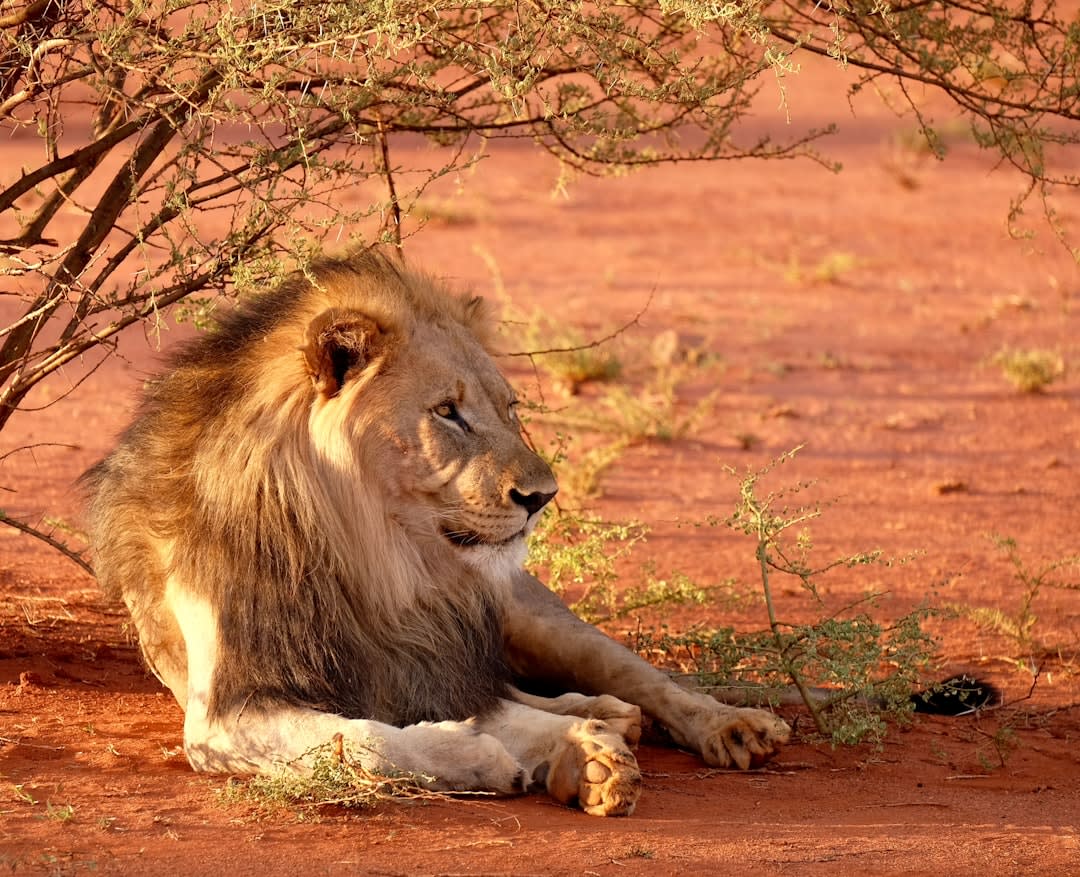
South Africa is one of the countries where well-funded, well-managed protected areas have supported lion population increases, but habitat pressure, conflict, illegal killing and the captive-lion industry remain serious challenges. This 2026 guide explains the conservation work, setbacks and responsible ways travellers can help.
Last reviewed July 2026. Conservation data changes — see the cited sources for the latest figures.
Quick answer: Lion conservation in South Africa has benefited from comparatively strong protected-area management, but it is not a finished success story. A review cited by African Parks reports that lion populations rose by approximately 11% in countries including South Africa where parks were well funded and properly managed, while African lions overall have declined sharply and occupy a small fraction of their former range.[10] South African conservation still must address human–lion conflict, prey depletion, habitat fragmentation, illegal killing and the legacy of commercial captive-lion breeding.[3][5][15]
For travellers researching a Tanzania vs South Africa safari, lion conservation is an important part of the comparison. South Africa's protected areas and private reserves can support intensive management and monitoring, but conservation outcomes depend on long-term funding, effective governance and cooperation with communities—not simply on whether a destination offers excellent wildlife viewing.
Why lion conservation matters in South Africa
The African lion (Panthera leo) is a top predator. By preying on herbivores, often including vulnerable or diseased animals, lions influence food webs and contribute to broader ecosystem functioning.[6] Protecting lions therefore means protecting the landscapes, prey populations and management systems on which many other species also depend.
South Africa is particularly important because it is identified among the southern African countries where lion populations have performed better under well-funded, effective park management.[10] That broad result should not be mistaken for uniform recovery: lion populations differ between landscapes, and national or continental averages can conceal declines in individual populations.
Lions need large areas, adequate prey and tolerance from people living near their range.[3] In South Africa, that makes conservation a landscape-scale task involving national parks, provincial reserves, private reserves, neighbouring farms, local authorities, researchers, tourism operators and communities. A reserve can protect lions inside its boundaries, but conflict, prey pressures and habitat changes outside those boundaries can still affect long-term viability.
For visitors choosing a South Africa safari best time to go, the conservation question is equally important: the strongest safari model is one that contributes to protection and local livelihoods rather than treating wildlife as a product disconnected from the people who share its habitat.
The main threats to lions in South Africa
Habitat loss and fragmentation
Agricultural expansion, mining, logging, infrastructure development and encroachment into protected areas continue to reduce and fragment lion habitat across Africa.[3] Fragmentation can isolate populations, restrict movement and separate lions from prey and other populations. The resulting conservation challenge is not only the amount of land available, but whether landscapes remain connected and ecologically functional.
South Africa's wider conservation planning must therefore consider land-use decisions beyond famous reserves. Lions require space, while surrounding communities and landowners require secure livelihoods. Effective planning needs policymakers, land-use experts, local government, traditional leadership, communities and conservation organisations to work together.[9]
Declining prey and snaring
Bushmeat hunting and competition with livestock can reduce wild prey populations, lowering the carrying capacity of lion habitat.[3] Snares set for other wildlife can also injure or kill lions as bycatch.[3] This links lion conservation to broader protected-area protection: ranger patrols, prey monitoring, law enforcement and habitat management all matter alongside direct lion research.
Conflict with people and livestock
Lions can kill livestock, creating financial and emotional costs for households living near wildlife areas. Retaliatory or cultural killings are recognised direct-mortality threats across Africa.[3] The most durable response is not simply removing individual lions; it is an integrated programme that improves livestock protection, supports affected people, strengthens local governance and creates credible ways for communities to benefit from conservation.[1]
The IUCN's 2026 review of 91 conservation projects across Africa found that integrated approaches produced stronger outcomes than isolated actions. Measures highlighted in the review included improved livestock protection, veterinary support, community ranger programmes and local governance structures.[1] These findings are relevant to South Africa because they emphasise prevention, trust and local capacity rather than relying on enforcement alone.
Illegal killing and the lion-bone trade
Illegal killing is an evolving concern. Lion parts and bones have been traded as substitutes for tiger bones in some traditional Asian medicine markets, creating an additional incentive for poaching.[5] The Wildlife Conservation Network also identifies direct mortality, snaring bycatch and poorly managed or unregulated hunting among the threats facing African lions.[3]
South Africa's captive-lion industry has added complexity to this issue. The David Shepherd Wildlife Foundation reports that the South African government historically allowed an annual international export quota for lion skeletons from captive-breeding facilities.[5] World Animal Protection states that the lion-bone export quota was reduced to zero after a 2019 High Court ruling, while also reporting that illegal trade continued and enforcement remained weak.[15] These sources describe policy and enforcement concerns; they do not establish that every captive facility or every lion-related operation has the same practices.
Climate and changing landscapes
Climate change is an emerging research and management issue for lions. WildCRU lists projects examining climate impacts on lion habitat and behaviour.[8] The available research supplied for this article does not provide a South Africa-specific climate statistic, so the responsible conclusion is qualitative: changing conditions may alter habitats, water availability, prey distribution and the way lions interact with people, and these effects require monitoring rather than unsupported predictions.
What is being done to conserve lions?
Protected-area management and security
Park security is foundational. African Parks reports that lion populations rose approximately 11% in countries including Botswana, Namibia, South Africa and Zimbabwe where parks were well funded and properly managed.[10] The same comparison reported major declines across North and West Africa, illustrating how management capacity can shape conservation outcomes.
Security is more than anti-poaching patrols. Effective protected-area management also requires vehicles, rangers, ecological monitoring, veterinary capacity, functioning governance and money for routine operations. A study of African protected areas with lions found a positive association between funding and management resources, while estimating that more than $1 billion annually would be needed to secure Africa's protected areas with lions.[11] The study's country table lists South Africa as having nine protected areas with lions and a total lion protected-area area of 28,725 square kilometres; it also presents several minimum funding estimates, ranging from $28.09 million to $58.31 million depending on the method used.[11]
Monitoring, research and adaptive management
Reliable monitoring helps managers identify whether lion numbers, distribution and threats are changing. WildCRU researchers have surveyed lion populations in 14 African countries, produced maps of lion presence, trained students from lion-range countries and supported conservation planning on habitat loss, conflict, poaching, the bone trade and hunting.[8] Research of this kind helps move management away from assumptions and towards measurable decisions.
Monitoring should include more than counting lions. Managers need information about prey, livestock losses, snaring, habitat condition, disease, movements and community attitudes. This is why veterinary support, local knowledge, camera traps and ranger observations can complement conventional population surveys.
Community-based conservation
The IUCN's 2026 evidence review found that community ranger programmes, improved livestock protection and local governance were among the approaches that helped reduce pressure on wildlife and build support for conservation.[1] The Nature study on free-ranging African lions similarly concludes that lion conservation requires policymakers, economists, land-use planners, local communities, traditional leaders and all levels of government—not conservationists acting alone.[9]
South Africa's community-conservation context is therefore central to lion protection. Travellers wanting a broader explanation of how local landholders and communities can participate should read SafariFind's Community Conservancies in South Africa: 2026 Guide. Community benefit is not an optional public-relations addition: without credible local incentives and fair participation, tolerance for dangerous wildlife can be difficult to sustain.
Addressing captive lion breeding
South Africa's captive-lion breeding industry expanded from the 1990s, according to World Animal Protection, and has been criticised for its effects on captive and wild lions.[15] The organisation reports that South Africa's environment ministry recommended voluntary exit options before a mandatory phase-out was approved.[15] This is a significant policy direction, but implementation, facility closure, animal welfare, demand reduction and enforcement remain practical challenges.
Captive-lion issues should be kept distinct from the conservation of free-ranging lions. A captive facility is not automatically evidence of wild-lion recovery, and tourism or breeding claims should be assessed against transparent welfare, conservation and regulatory standards.
Community and tourism's role
Tourism can help fund conservation when visitor spending supports protected-area operations, monitoring, guides, local employment and community benefits. The funding study found that protected-area financing is associated with management resources, while the IUCN review emphasised integrated approaches that connect wildlife protection with community support.[1][11]
Tourism also has vulnerabilities. IUCN's African Wildlife Initiative report records how COVID-19 lockdowns reduced tourism and long-term funding for protected-area monitoring in Hluhluwe-iMfolozi Park, affecting the capacity of Wildlife ACT to support conservation activities.[12] This illustrates why conservation finance should be diversified rather than dependent on a single income stream.
Visitors can book conservation-supporting safaris on SafariFind, while asking operators exactly how fees reach parks, monitoring programmes, local staff and communities. A responsible safari does not promise that every sighting directly "saves" a lion; it explains the financial and conservation links honestly.
Results and setbacks: a balanced 2026 picture
| What the evidence shows | What it means |
|---|---|
| South Africa is among countries where lion populations rose approximately 11% under well-funded, properly managed park systems.[10] | Effective protection and management can support recovery. |
| African lions overall have declined by roughly half over 25 years, with a maximum estimate of 25,000 individuals remaining and about 6% of historical range occupied, according to a 2026 Wildlife Conservation Network article.[3] | South African successes sit within a severe continental conservation crisis. |
| There are 62 known extant free-ranging lion populations in Africa; fewer than half have more than 100 lions.[9] | Small, isolated populations remain highly vulnerable. |
| The protected-area funding study estimates that more than $1 billion is needed annually across Africa to secure protected areas with lions.[11] | Long-term financing is a structural requirement, not a short-term fundraising target. |
| South Africa's lion-bone export quota was reduced to zero after a 2019 High Court ruling, but illegal trade and weak enforcement have still been reported.[15] | Policy change is important, but enforcement and demand reduction remain necessary. |
The most defensible 2026 conclusion is cautious optimism. South Africa demonstrates that funding, protection and management can produce better outcomes, but the country still faces conflict, habitat pressures, illegal trade risks and difficult questions about captive lions. Recovery is not guaranteed, and progress in one protected area cannot be used to describe every South African lion population.[3][9][10]
How travellers can help responsibly
- Choose transparent operators. Ask which protected areas receive visitor fees, how guides and local staff are employed, and whether the operator publishes conservation or community commitments.
- Prefer genuine wild-lion experiences. Avoid attractions that offer walking with, petting or close-contact encounters with lion cubs. Captive-lion tourism has been criticised for welfare and conservation reasons.[15]
- Do not request a guaranteed sighting. Ethical guides should prioritise animal welfare and safe viewing distances over pressure to approach or crowd lions.
- Support local businesses. Use community-owned accommodation, local guides and locally produced services where available. Integrated conservation evidence supports combining wildlife measures with community benefits.[1]
- Ask about evidence. Conservation claims should identify the park, organisation, programme and measurable activity rather than relying on vague statements.
- Plan travel thoughtfully. A responsibly priced South Africa safari from the United States should be judged by value, safety, conservation transparency and local benefit—not only by the lowest advertised rate.
For a broader African elephant conservation guide, see how protection of large landscapes can benefit several species at once. Lions, elephants, prey species and people often depend on the same protected-area funding, governance and habitat decisions.
Frequently Asked Questions
What is the conservation status of lions in South Africa in 2026?
Lions are classified as Vulnerable globally, and South Africa is one of the countries associated with better outcomes in well-funded, well-managed protected areas.[6][10] However, habitat pressure, conflict, illegal killing and captive-lion trade concerns remain.
How many lions are left in Africa?
A 2026 Wildlife Conservation Network article gives a maximum estimate of 25,000 African lions remaining, while other supplied sources cite estimates of fewer than 20,000.[3][5] These figures vary by method and date, so the cited sources should be checked for updates.
What are the main threats to lions in South Africa?
The main threats are habitat loss and fragmentation, declining prey, livestock conflict, retaliatory killing, snaring bycatch, illegal killing and the lion-bone trade.[3][5] Climate-related changes to habitat and behaviour are also an active research concern.[8]
Is lion poaching a problem in South Africa?
Illegal killing and the trade in lion parts are recognised conservation concerns, and South African sources report continued illegal lion-bone trade despite policy action on the export quota.[3][15]
How does tourism help lion conservation in South Africa?
Tourism can provide revenue for protected-area management, monitoring, staff and community benefits, but its impact depends on transparent financial links and responsible management.[1][11] The COVID-19 period showed that tourism-dependent conservation finance can also be vulnerable.[12]
Is captive lion breeding good for wild lion conservation?
The supplied research does not support treating captive breeding as equivalent to recovery of wild populations. World Animal Protection reports concerns about the South African captive-lion industry and describes policy efforts to phase it out.[15]
What is the best safari in South Africa for seeing lions?
The research supplied here does not rank individual safari parks or lodges by lion sightings. In general, choose a protected area or reserve with transparent management, responsible guiding and credible conservation funding rather than relying on guaranteed-sighting claims.[1][10][11]
How can tourists support lion conservation responsibly?
Choose transparent operators, support local businesses and community programmes, avoid cub-petting and close-contact attractions, and ask how safari fees support protection and local livelihoods.[1][15]
Does South Africa have more successful lion conservation than other African countries?
South Africa is included among countries where lion populations rose approximately 11% in well-funded, properly managed parks.[10] That does not mean every South African population is increasing or that the country has solved the threats facing lions.
Why are communities important to lion conservation?
Communities living alongside lions may face livestock losses and safety concerns, so durable conservation requires livestock protection, local governance, community ranger programmes and meaningful participation.[1][9]


