 Ask Tembo
How Safari Tourism Funds Conservation in Botswana (2026)

Botswana uses protected-area fees, high-value low-volume tourism and community-based natural-resource management to help finance biodiversity protection. BIOFIN Botswana reports that protected-area revenue rose from a projected US$1.8 million to US$7.8 million in its first year after fee reform [2].
Quick answer: Safari tourism funds conservation in Botswana through protected-area entrance fees, tourism-related payments, private-sector contributions, community-based natural-resource management and high-value, low-volume tourism. BIOFIN Botswana reports that protected-area fee reform increased first-year revenue from a projected US$1.8 million to US$7.8 million, with funds intended for conservation, infrastructure and local communities [2]. Tourism is an important financing mechanism, but it does not remove the need for public budgets, donor support, effective governance or community participation.
Last reviewed July 2026. Conservation data changes — see the cited sources for the latest figures.
Why ecotourism matters in Botswana
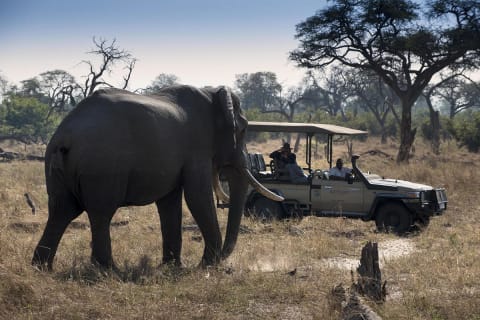
Botswana has built its conservation and tourism model around large landscapes, iconic wildlife and protected areas. BIOFIN Botswana states that more than 40% of the country's land surface has been designated as national parks and game reserves, where in-situ conservation takes place [2]. The same source identifies the Okavango Delta and Chobe as flagship destinations for high-value, low-volume tourism [2].
This model links wildlife habitat with an economic activity that depends on living animals, functioning ecosystems and attractive landscapes. Botswana's National Ecotourism Strategy describes protected-area entrance fees, donations and tourism businesses' earmarked contributions as possible routes for money to reach conservation organisations and natural-area management [3]. The strategy also recognises that tourism can generate revenue for protected areas and create incentives for conservation, while warning that tourism infrastructure and visitor behaviour can cause environmental and social impacts [3].
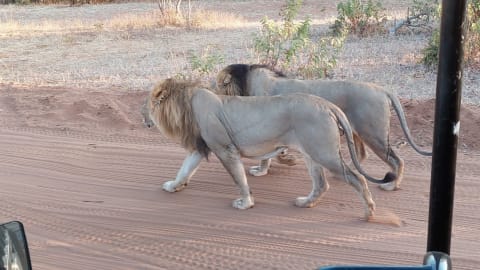
The conservation value of tourism extends beyond elephants and big cats. The Okavango River Basin connects Botswana with Angola and Namibia, while the country's wildlife landscapes support predators, wild dogs, cheetahs, zebras and other species. Conservation International reports work with government, private-sector and community partners on basin protection, wildlife corridors, predator and wild-dog conservation, cheetah conservation and zebra research in the Makgadikgadi salt pans [4]. Travellers interested in a particular species can also read SafariFind's guides to vulture conservation in Botswana and pangolin conservation in Botswana.
How safari tourism money reaches conservation
Protected-area and park fees
The most direct mechanism is payment for access to protected areas. Visitors may pay entrance, camping or other conservation-related fees, depending on the area and the applicable rules. Botswana's ecotourism strategy specifically identifies protected-area entrance fees as a way tourism can contribute directly to conservation [3].
BIOFIN Botswana worked with the Government of Botswana to revise protected-area fees. Its reported result was a rise from projected first-year revenue of US$1.8 million to US$7.8 million [2]. BIOFIN says these funds are reinvested in conservation efforts, infrastructure and local communities [2]. The result illustrates why pricing and collection systems matter: a visitor payment has limited conservation value if it is not collected efficiently, transparently allocated and connected to management priorities.
Tourism business contributions
Lodges, camps and tour operators can support conservation through donations or by earmarking part of the cost of accommodation, guiding services, merchandise or a wider holiday package. These mechanisms are recognised in Botswana's National Ecotourism Strategy [3]. The exact contribution varies between operators, so travellers should ask whether a stated conservation fee is mandatory or voluntary, who receives it and what reporting is available.
Tourism also creates demand for conservation-related jobs and services. The strategy presents ecotourism as a potential source of revenue and awareness, but it recommends stronger environmental assessment, monitoring and oversight of tourism operations [3]. A safari should therefore be judged not only by its wildlife sightings, but also by how responsibly it operates within the destination.
Community-based natural-resource management
Community-based natural-resource management, or CBNRM, is designed to give rural communities a role in managing wildlife and natural resources while allowing them to gain economic benefits. An IIED review describes a Botswana policy framework in which rural communities can obtain user rights over wildlife and tourism on their land, with technical assistance and training provided by the Department of Wildlife and National Parks and partner organisations [8].
The same review records the role of community institutions, the Department of Wildlife and National Parks, the Ministry responsible for the environment and tourism authorities in supporting community wildlife management, enterprise development and planning [8]. This matters because wildlife may move beyond formal national-park boundaries. If communities receive no benefit from living with wildlife, the economic case for conservation is weakened and conflict costs can increase.
Community benefits are not automatically guaranteed by the presence of tourism. They depend on secure rights, representative local institutions, fair contracts, transparent accounting and meaningful participation. Botswana's ecotourism strategy therefore supports stronger links between tourism activities and conservation, while also calling for attention to social and environmental impacts [3].
The threats tourism revenue is expected to address
Illegal hunting and bushmeat use
Illegal bushmeat hunting is a documented threat in the Okavango Delta. Research listed by Elephants Without Borders investigated illegal bushmeat hunting across approximately 20,000 square kilometres of the delta and assessed its potential contribution to wildlife declines and competition with predators [5]. The evidence does show why field protection, monitoring and community engagement require sustained funding.
Tourism revenue can help support the operational environment around conservation, including protected-area management, roads, equipment, ecological monitoring and staff capacity. However, the research supplied for this article does not establish a Botswana-wide tourism-funded ranger budget or a national reduction in poaching. Claims about direct anti-poaching results should therefore be checked against the accounts and reports of the relevant park, conservancy or organisation.
Human-wildlife conflict and landscape connectivity
Elephants and other wide-ranging animals do not remain inside administrative boundaries. A World Bank-led Global Wildlife Program project in Botswana is described as supporting integrated landscape approaches, dryland ecosystem resilience, ecological corridors and the reduction of human-wildlife conflict [6]. Corridor planning is particularly important where roads, fences, farms and settlements can interrupt seasonal movements.
Conservation International reports that an Ad Hoc Committee on Fences helped establish a 40-kilometre wildlife corridor along the Kwando River [4]. The example demonstrates that conservation funding is not limited to patrols. It can also support land-use planning, corridor protection, coexistence measures and research that keep connected landscapes functional.
Climate and ecosystem pressure
BIOFIN Botswana identifies continuing challenges both inside and outside protected areas, although the supplied research does not quantify a Botswana-wide climate impact or assign a specific tourism-funded amount to climate adaptation [2]. A responsible funding discussion should therefore avoid implying that tourism alone can finance ecosystem resilience. Protected-area budgets, public policy, community management, scientific monitoring and international conservation finance remain complementary.
What is being done: programmes, organisations and places
BIOFIN Botswana and results-based budgeting
BIOFIN Botswana, part of the United Nations Development Programme's global Biodiversity Finance Initiative, has worked on protected-area fee reform and broader biodiversity-finance planning [2]. It also introduced results-based budgeting in the biodiversity sector, linking financial allocations to measurable conservation outcomes in the protected-area system [2]. This approach is important because it shifts the question from "How much money was raised?" to "What conservation result did the spending deliver?"
BIOFIN also assessed subsidies across eight sectors, including agriculture, tourism and energy, to identify incentives that may harm biodiversity and propose reforms [2]. That work places safari revenue within a wider financial system rather than treating lodge donations or park fees as a complete solution.
A question about Botswana? Ask Tembo
Department of Wildlife and National Parks and community partners
The Department of Wildlife and National Parks is identified in the CBNRM research as a government institution providing technical assistance, training, institution building and support for rural communities managing wildlife and other natural resources [8]. Tourism authorities and community-based tourism structures have also been part of the framework described in that research [8].
On the ground, conservation depends on a combination of government agencies, local institutions, tourism operators and non-governmental organisations. Near Chobe National Park, conservation scientist Kathleen Alexander co-founded the Centre for African Resources, Animals, Communities, and Land Use, known as CARACAL, in 2001. Virginia Tech describes CARACAL as a nonprofit organisation promoting conservation while improving community lives through outreach and education [1].
Corridor and species conservation
Conservation International supports work in the Okavango River Basin and describes projects involving the Predator Wild Dog Program, cheetah conservation and zebra research in the Makgadikgadi salt pans [4]. Its Botswana programme also includes the Herding for Health model in Ngamiland, Kgalagadi and Bobirwa. The organisation says this community-driven livestock-management programme is intended to restore 4.6 million hectares of degraded land, create green jobs and reduce 4.7 million tonnes of carbon dioxide equivalent over the project's lifetime [4]. These are project targets and reported plans, not a completed national tourism result.
Leopard conservation shows why tourism and conservation decisions need science. After Botswana's tourist-hunting ban was introduced in 2014 and lifted in 2019, the Safari Club International Foundation partnered with Botswana's Department of Wildlife and other stakeholders on leopard-density data collection from October 2022 [7]. The project's stated purpose was to improve abundance information needed to assess sustainable harvest levels [7]. This is a reminder that different tourism models can have different funding and management implications, and that decisions should be informed by reliable population data.
Results and setbacks: what the evidence supports
| Area | Evidence from the research | What it means |
|---|---|---|
| Protected-area finance | Projected first-year revenue increased from US$1.8 million to US$7.8 million after fee reform [2]. | Fee design and collection can materially strengthen conservation finance. |
| Protected landscapes | More than 40% of Botswana's land surface is designated as national parks and game reserves, according to BIOFIN [2]. | Large areas require sustained management, not only designation. |
| Connectivity | A 40-kilometre wildlife corridor was established along the Kwando River through work involving an Ad Hoc Committee on Fences [4]. | Tourism-linked conservation can support landscape planning beyond park borders. |
| Science and management | Leopard-density data collection began in the reported project period from October 2022 [7]. | Better data can inform sustainable management decisions. |
| Financial vulnerability | The MBZ Conservation Fund reported that pandemic travel restrictions damaged ecotourism revenue and that 83% of surveyed conservationists had difficulty conducting critical fieldwork [9]. | Dependence on visitors creates resilience risks when travel stops. |
The strongest documented result in the supplied research is the protected-area fee increase reported by BIOFIN [2]. Other examples show programme activity, planned restoration, corridor work or improved research capacity rather than a single nationwide measure of tourism's conservation impact. That distinction is important for transparent reporting.
The COVID-19 shock also exposed a weakness in the ecotourism model. The MBZ Conservation Fund reported that travel restrictions caused severe declines in ecotourism revenue and disrupted conservation work among surveyed organisations [9]. Botswana therefore needs diversified finance, including public funding, philanthropy, international mechanisms and community enterprises, alongside visitor spending.
How travellers can help responsibly
- Ask where your money goes. Request a clear explanation of park fees, conservation levies, community payments and donations. Botswana's ecotourism strategy recognises several possible routes, but not every operator uses them in the same way [3].
- Choose low-impact operators. Look for evidence of waste, water, energy and wildlife-viewing policies, since the national strategy warns that tourism infrastructure and visitor behaviour can create impacts [3].
- Respect wildlife distance and local rules. Responsible viewing protects animal behaviour and reduces pressure on sensitive sites; operators should explain these standards before activities begin [3].
- Support locally owned services where possible. Community-based tourism works best when communities have rights, participation and a fair share of benefits, as described in Botswana's CBNRM framework [8].
- Think beyond the wildlife sighting. A conservation-supporting safari may contribute through fees, accommodation, guiding, community partnerships and donations. Travellers can book conservation-supporting safaris on SafariFind, then ask the operator for specific evidence of its contributions.
- Plan responsibly before departure. For health requirements, consult SafariFind's Botswana vaccinations and health rules guide or the relevant nationality-specific advice. These practical steps help avoid disruptions that can affect local tourism businesses.
Safari tourism is not a substitute for conservation governance. Its value is greatest when visitor payments are transparent, communities have meaningful rights and benefits, wildlife management is science-led, and financial systems measure outcomes. Botswana's protected-area fee reform shows the potential scale of tourism-related finance, while the pandemic and ongoing threats show why a resilient conservation economy must use more than one source of income.
Frequently Asked Questions
How does safari tourism fund conservation in Botswana?
Safari tourism funds conservation through protected-area fees, tourism-business contributions, donations, community-based tourism and high-value, low-volume tourism. BIOFIN Botswana reports that protected-area fee reform increased projected first-year revenue from US$1.8 million to US$7.8 million [2][3].
How much does a safari in Botswana cost?
The research supplied for this article does not provide current safari prices. Costs vary by accommodation, season, transport, itinerary and conservation or park fees; see SafariFind's Botswana safari cost guide for 2026 for pricing context.
Does Botswana use a high-value, low-volume tourism model?
Yes. BIOFIN Botswana identifies high-value, low-volume tourism in destinations including the Okavango Delta and Chobe as part of the country's protected-area and biodiversity approach [2].
How much of Botswana is protected for conservation?
BIOFIN Botswana states that more than 40% of Botswana's land surface has been designated as national parks and game reserves [2].
What are the main conservation threats in Botswana?
The supplied research identifies illegal bushmeat hunting, human-wildlife conflict, habitat and connectivity pressures, and continuing challenges inside and outside protected areas. Research examined illegal bushmeat hunting across approximately 20,000 square kilometres of the Okavango Delta [2][5][6].
How do communities benefit from wildlife tourism in Botswana?
Botswana's CBNRM framework allows rural communities to gain user rights over wildlife and tourism on their land, with technical support, training and institution-building described in the research [8]. The exact benefit depends on local rights, agreements, governance and tourism arrangements.
What conservation work is happening around Chobe National Park?
Near Chobe National Park, Kathleen Alexander co-founded CARACAL, a nonprofit organisation that promotes conservation and community well-being through outreach and education [1].
What is BIOFIN Botswana doing for conservation finance?
BIOFIN Botswana has supported protected-area fee reform, results-based budgeting and reviews of potentially harmful biodiversity subsidies across sectors including agriculture, tourism and energy [2].
How can travellers make a Botswana safari more conservation-friendly?
Ask operators how fees and donations are allocated, support community-linked businesses, follow wildlife-viewing rules, choose low-impact operations and look for transparent conservation reporting. Botswana's National Ecotourism Strategy identifies both the benefits and potential impacts of tourism [3].
Why is tourism revenue alone not enough for conservation in Botswana?
Tourism revenue can fall sharply when travel is disrupted. The MBZ Conservation Fund reported that pandemic restrictions caused severe ecotourism revenue declines and disrupted fieldwork among surveyed conservationists [9]. Conservation therefore also needs public budgets, donors, community institutions and diversified finance.
Trips that match this guide