 Ask Tembo
Black Rhino Conservation in Kenya 2026: Status, Threats & Success
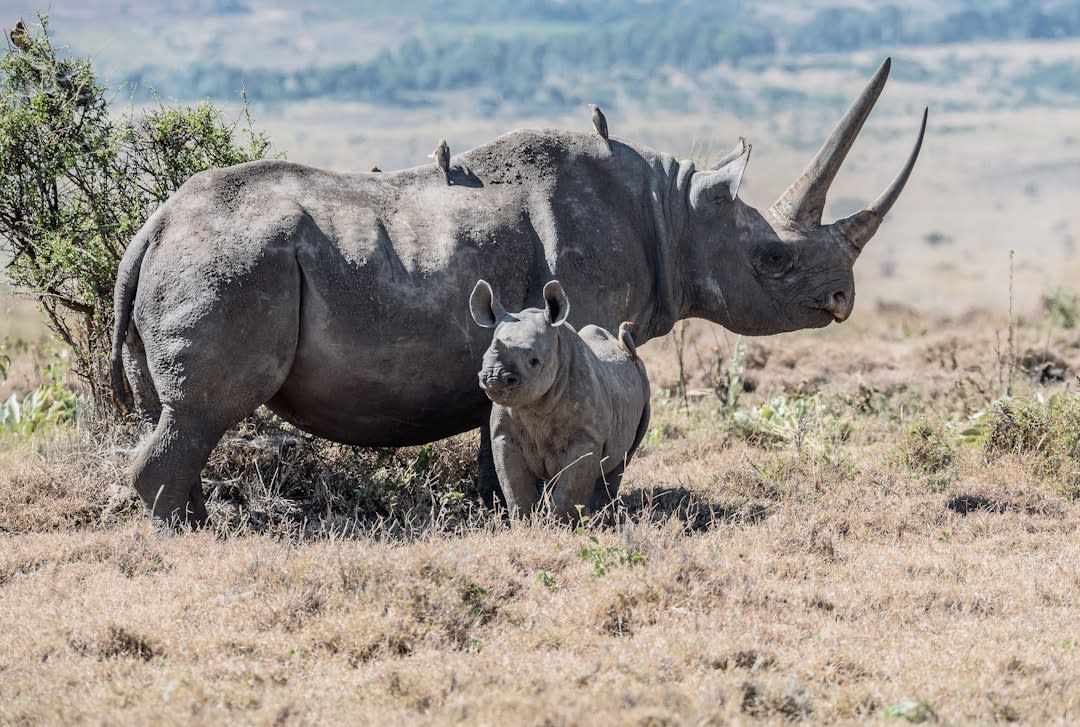
Kenya's eastern black rhino population has surged from ~240 in 1984 to over 1,000 today—a 150% recovery. Yet the species remains critically endangered; continued investment in anti-poaching, habitat expansion, and community partnerships is essential.
Quick Answer
Kenya now hosts 1,059 black rhinos (as of end-2024), making it the third-largest population in Africa behind South Africa and Namibia.[1] The eastern black rhino subspecies has grown from approximately 240 individuals in 1984 to over 1,000 today—a remarkable 150% increase.[2] However, the species remains critically endangered globally, with only ~6,788 black rhinos surviving across Africa.[3] Continued intensive protection, habitat restoration, and community engagement are essential to prevent backsliding and reach Kenya's target of 2,000 black rhinos by 2026.[2]
Why Black Rhino Conservation Matters in Kenya
The black rhino (Diceros bicornis) is one of Africa's most iconic yet fragile megafauna. Historically abundant across sub-Saharan Africa, the species was hunted to near-extinction in the 20th century. Kenya was once home to over 20,000 black rhinos in 1970, but by the mid-1980s, fewer than 400 remained.[4] Today, Kenya's recovery effort represents one of conservation's most dramatic turnarounds—and a beacon for endangered species management globally.
The black rhino is not merely a symbol of wild Africa. Its protection preserves entire ecosystems: rhinos shape vegetation structure, create water holes, and support biodiversity across savanna and woodland habitats. Kenya's rhino sanctuaries and conservancies now anchor wildlife tourism, generating revenue that funds ranger salaries, community development, and habitat protection across the country's protected areas.
The Scale of Historical Decline
The collapse of black rhino numbers in Kenya and across Africa is one of conservation's starkest cautionary tales. In the early 19th century, an estimated 100,000 black rhinos roamed Africa in diverse vegetation types.[5] By 1970, that figure had fallen to approximately 65,000.[5] Between 1960 and 1995, black rhino numbers dropped by a devastating 98%, to fewer than 2,500 individuals.[6] The primary drivers were:
- Poaching for horn trade: Rhino horn has been illegally trafficked for use in traditional medicine and as status symbols, driving relentless demand in Asian markets.[6]
- Habitat loss: Agricultural expansion, infrastructure development, and human settlement converted rhino range into farmland and settlements.[4]
- Lack of protection: Before the 1989 establishment of the Kenya Wildlife Service (KWS), enforcement capacity was minimal.[7]
In Kenya specifically, the population plummeted from over 20,000 in 1970 to just 350 by the mid-1980s—a 98% loss in 15 years.[4]
Current Threats to Black Rhinos in Kenya
Poaching and Wildlife Crime
Although Kenya's poaching pressure has declined relative to the 1970s–90s crisis, it remains a persistent threat. In 2024, Kenya recorded 7 rhino poaching incidents across all species.[8] While this represents a relatively low rate compared to regional neighbours (Namibia recorded 255 poaching incidents in the same period),[8] even single poaching events can significantly impact small populations. Organised criminal networks continue to target rhinos for horn, which fetches thousands of dollars on black markets in Vietnam and other Asian countries.
Effective anti-poaching measures in Kenya have kept poaching rates lower than they might otherwise be, but vigilance remains critical.
Habitat Loss and Human Population Growth
Kenya's human population of approximately 55 million is growing rapidly, placing increasing pressure on wildlife habitat. A sobering long-term analysis by the IUCN African Rhino Specialist Group (AfRSG) projects that by 2122, habitat available to black rhinos across Africa might support only 21,000 animals—less than 20% of the estimated 113,000 that existed in 1880.[9] Infrastructure development, freshwater competition, and climate variability all threaten the landscapes where rhinos live.
In Kenya's Tsavo-Mkomazi landscape, which holds nearly one-fifth of Kenya's black rhino population, infrastructure development and climate change are creating direct competition for resources between wildlife and local communities.[10]
Sanctuary Overcrowding
A paradoxical challenge has emerged from conservation success: Kenya's 17 rhino sanctuaries, which host over 1,000 of the critically endangered animals, have become overcrowded.[11] Increased competition for resources, territorial fights, and stress among rhinos signal that some populations have exceeded their ecological carrying capacity. This has necessitated a shift in strategy toward free-release populations in larger protected areas.[11]
What's Being Done: Kenya's Integrated Conservation Strategy
The Kenya Wildlife Service and Sanctuary System
The formation of the Kenya Wildlife Service (KWS) in 1989 marked the turning point for black rhino conservation in the country.[7] The KWS implemented three core strategies that remain central today:
- Anti-poaching protection: Armed patrols, intelligence networks, and ranger deployment in protected areas and sanctuaries.
- Habitat protection and expansion: Securing and expanding protected areas where rhinos can breed safely.
- Population management: Translocation of rhinos from overcrowded sanctuaries to new release sites with breeding potential.
Kenya now maintains 17 dedicated rhino sanctuaries across the country, including the famous Ol Pejeta Conservancy, Lewa Wildlife Conservancy, Lake Nakuru National Park, and Tsavo's Ngulia Rhino Sanctuary.[11]
Kenya's Black Rhino Action Plan (2022–2026)
In mid-2022, the African Wildlife Foundation (AWF) and the KWS developed Kenya's official Black Rhino Action Plan, the government's strategic blueprint for species recovery.[10] The plan targets a national population of 2,000 black rhinos by 2026, with a growth rate of over 5% annually.[10] This target is on track: the population stood at 1,059 as of end-2024.[1]
The plan integrates:
- Intensive monitoring using IUCN African Rhino Specialist Group guidelines.[12]
- Strategic translocation to establish new breeding populations in underutilised protected areas.[11]
- Community engagement and benefit-sharing to reduce human-wildlife conflict.
- Climate resilience and habitat restoration across the Tsavo-Mkomazi and other critical landscapes.
Technology and Innovation
Kenya's rhino conservancies have adopted cutting-edge technologies to enhance protection. Thermal imaging cameras and artificial intelligence are now deployed for night-time patrol and early-warning systems, significantly improving ranger effectiveness and rhino security across sanctuaries like Loisaba Conservancy.[6] These tools complement traditional K9 units (trained tracking dogs) and full-time security personnel.
Key Organisations and Partnerships
Multiple international and local organisations support Kenya's black rhino recovery:
| Organisation | Role in Kenya's Rhino Conservation |
|---|---|
| Kenya Wildlife Service (KWS) | Government agency; primary authority for rhino protection, monitoring, and translocation. |
| African Wildlife Foundation (AWF) | Developed Kenya's Black Rhino Action Plan; supports training, community engagement, and landscape conservation in Tsavo-Mkomazi.[10] |
| Save the Rhino International | Funds anti-poaching patrols and ranger operations; supported emergency funding during COVID-19 pandemic.[12] |
| Zoological Society of London (ZSL) | Works with KWS in Tsavo Conservation Area; pioneered sanctuary translocation strategy.[13] |
| The Nature Conservancy | Supports anti-poaching teams and habitat restoration; manages Loisaba Conservancy partnership. |
| Sheldrick Wildlife Trust | Operates field conservation programmes; coordinates large-scale translocation efforts across Laikipia region.[14] |
Translocation and Landscape Expansion
In response to sanctuary overcrowding, the KWS has spearheaded translocation initiatives to establish new free-release populations. In 2025, a large-scale effort relocated 19 black rhinos from Ol Pejeta, Lewa, Borana, and Lake Nakuru into Segera Conservancy in Laikipia, a landscape with capacity to support population growth.[14] This strategy follows the principle that for the eastern black rhino subspecies to achieve stability, Kenya must reach a population of 2,000 animals distributed across multiple, interconnected populations rather than concentrated in a few sanctuaries.
Community Engagement and Tourism's Role
Kenya's rhino recovery is inseparable from community partnerships and wildlife tourism revenue. Private and community conservancies in Laikipia, Tsavo, and the Mara region generate income from safari tourism that directly funds ranger salaries, patrol vehicles, and operational costs. During the COVID-19 pandemic, when tourism collapsed, conservation funding dried up; international donors, including Save the Rhino International, had to provide emergency grants to seven rhino-holding conservancies to prevent ranger redundancies and loss of protection capacity.[12]
Responsible safari tourism—where visitors pay to see rhinos in their natural habitat—creates economic incentives for local communities to protect rather than exploit wildlife. When booking reputable Kenya safari companies, travellers can verify that operators contribute a portion of fees to conservation trusts and community development programmes.
Results: Kenya's Conservation Gains
Population Recovery: The Numbers
Kenya's black rhino recovery is measurable and dramatic:
- 1984: ~240 eastern black rhinos (the lowest point).[2]
- 2024: 1,059 black rhinos (eastern subspecies).[1]
- Growth rate: Over 5% annually, exceeding the 2026 target trajectory.[10]
- Regional ranking: Kenya now holds the third-largest black rhino population in Africa, after South Africa and Namibia.[2]
This 150% increase over four decades represents one of the most successful endangered-species recoveries in conservation history.[2]
Continental Perspective
Kenya's success is part of a broader African recovery. Across the continent, the IUCN AfRSG documented a 28% increase in black rhino numbers over the past decade, from approximately 5,300 in 2014 to 6,788 by end-2024.[3] If current conservation management efforts continue, the IUCN projects the black rhino population could reach 8,943 by 2032—a conservation gain of 2,456 individuals.[9]
However, this projection depends entirely on sustained funding and commitment. The same analysis warns that if conservation efforts were halted, the eastern black rhino population could plummet from 1,471 individuals to just 193 by 2032.[9]
Sanctuary Success Stories
Specific sanctuaries have demonstrated the power of intensive management:
- Tsavo's Ngulia Rhino Sanctuary: Established with ZSL support, now hosts a significant portion of Kenya's wild black rhino population.[13]
- Ol Pejeta Conservancy: A private conservancy that has served as both a breeding sanctuary and translocation source for new populations.[14]
- Lewa Wildlife Conservancy: Pioneered modern anti-poaching methods and community engagement models now adopted across Kenya.[7]
Ongoing Challenges and Setbacks
Data Quality and Monitoring Gaps
Despite successes, challenges remain. A 2022 audit of Kenya's rhino monitoring systems revealed inconsistencies in data collection across sanctuaries, including multiple but incomplete data sources, different date formats, and incomplete observation records.[12] Accurate population monitoring is essential for management decisions; the KWS and partners have since improved standardisation, but gaps persist.
Funding Vulnerability
Rhino conservation is expensive. The COVID-19 pandemic exposed the fragility of funding models dependent on tourism. Conservancies in Laikipia and elsewhere faced devastating financial losses when international visitors stopped arriving.[12] While emergency funding was secured, the incident highlighted the need for diversified, long-term funding mechanisms independent of tourism cycles.
Habitat Limits and Long-Term Sustainability
The IUCN's long-term habitat analysis reveals a sobering reality: even with aggressive conservation, the available habitat for black rhinos across Africa is projected to shrink by 80% by 2122 due to human population growth and climate change.[9] Kenya's 2,000-rhino target is achievable in the near term, but maintaining larger, genetically viable populations over centuries will require continental cooperation, habitat restoration at landscape scale, and adaptation to climate shifts.
How Travellers Can Support Black Rhino Conservation
Visitors to Kenya can contribute meaningfully to rhino recovery:
- Choose conservation-focused operators: Book safaris with companies that are transparent about conservation contributions. Ask operators what percentage of fees go to anti-poaching, ranger training, and habitat protection. SafariFind's directory includes safari companies recognised for conservation partnerships.
- Visit rhino sanctuaries directly: Allocate safari itineraries to include Tsavo, Ol Pejeta, Lewa, or Lake Nakuru, where entrance fees and guided walks directly fund protection.
- Support community conservancies: Private and community conservancies in Laikipia and the Mara region generate local employment and incentivise habitat protection. Staying at these properties channels revenue to ranger wages and community benefits.
- Follow responsible wildlife viewing: Maintain distance, minimise noise, and never approach rhinos on foot without a guide. Stress harms breeding success in small populations.
- Respect local cultures: Engage authentically with Maasai, Samburu, and other communities whose lands overlap with rhino habitat. Ethical tourism respects indigenous land rights and knowledge.
- Educate yourself: Learn about the species, threats, and conservation solutions before and during your visit. Informed travellers become conservation advocates.
Before planning your trip, review Kenya's entry requirements. New Zealand citizens can obtain an eTA for Kenya, and vaccination requirements should be confirmed with your healthcare provider. The best time for wildlife viewing varies by region; Tsavo is excellent year-round, while the Mara's migration peaks in July–September.
Looking Forward: 2026 and Beyond
Kenya's black rhino target of 2,000 individuals by 2026 is within reach. The population is growing at over 5% annually, and strategic translocations are establishing new breeding populations. However, success at 2,000 is only a milestone, not an endpoint. The species will remain critically endangered until populations across multiple African countries reach several thousand, and until habitat security is guaranteed across landscapes facing climate change and human expansion.
The next phase of conservation must balance three imperatives:
- Expand habitat and populations: Continue translocation to new protected areas and build population redundancy across Kenya and the region.
- Secure long-term funding: Develop diverse revenue streams (tourism, conservation trust endowments, government budgets, international funds) to insulate protection from tourism shocks.
- Integrate climate adaptation: As rainfall patterns shift and vegetation changes, rhino conservation must evolve to maintain habitat quality and connectivity.
Kenya's black rhino recovery proves that species on the brink of extinction can recover with sustained commitment, adequate resources, and science-based management. The challenge now is to extend that success across Africa and secure it for generations to come.
Last reviewed July 2026. Conservation data changes—see the cited sources for the latest figures.
Frequently Asked Questions
How many black rhinos does Kenya have in 2026?
Kenya has 1,059 black rhinos as of the end of 2024, primarily the eastern black rhino subspecies. The population has grown from approximately 240 in 1984, representing a 150% increase. Kenya's target is to reach 2,000 black rhinos by 2026, and current growth rates of over 5% annually suggest this target is on track.
Why is the black rhino critically endangered?
The black rhino is critically endangered due to catastrophic poaching in the 20th century. Between 1960 and 1995, numbers crashed by 98% from an estimated 65,000 (1970) to fewer than 2,500. Poaching for illegal horn trade, habitat loss, and weak enforcement decimated populations. Although numbers have recovered in Kenya and parts of southern Africa, only ~6,788 black rhinos survive globally—a tiny fraction of historical populations.
What are the main threats to black rhinos in Kenya today?
Current threats include: (1) poaching for horn trade (Kenya recorded 7 poaching incidents in 2024); (2) habitat loss from human population growth and agricultural expansion; (3) sanctuary overcrowding, which increases stress and territorial conflict; (4) climate change and freshwater competition; and (5) vulnerability to funding shocks, as demonstrated during the COVID-19 pandemic. Despite these challenges, Kenya's anti-poaching capacity has kept poaching rates relatively low compared to other African countries.
Which organisations lead black rhino conservation in Kenya?
The Kenya Wildlife Service (KWS) is the primary government authority. Key partners include the African Wildlife Foundation (AWF), which developed Kenya's Black Rhino Action Plan; Save the Rhino International, which funds anti-poaching operations; the Zoological Society of London (ZSL), which works in Tsavo; The Nature Conservancy; and the Sheldrick Wildlife Trust. Private and community conservancies like Ol Pejeta, Lewa, and Borana also play critical roles.
What is Kenya's Black Rhino Action Plan?
Developed in mid-2022 by the African Wildlife Foundation and Kenya Wildlife Service, the plan is Kenya's official conservation strategy targeting 2,000 black rhinos by 2026. It integrates anti-poaching protection, habitat expansion, population management through translocation, community engagement, and climate resilience. The plan uses IUCN monitoring guidelines and aims for a sustained 5%+ annual growth rate.
How does translocation help black rhino conservation?
Translocation moves rhinos from overcrowded sanctuaries into new protected areas with breeding capacity. Kenya's sanctuaries have become so successful they've exceeded ecological carrying capacity, causing stress and territorial fighting. Recent translocations, like moving 19 rhinos to Segera Conservancy in 2025, establish new populations in larger landscapes, reducing overcrowding and creating genetic and demographic redundancy. This strategy is essential for long-term species stability.
Can tourists help fund black rhino conservation in Kenya?
Yes. Safari tourism generates revenue that directly funds ranger salaries, anti-poaching patrols, and habitat protection. Responsible travellers should book with operators transparent about conservation contributions, visit rhino sanctuaries like Tsavo and Ol Pejeta, and stay at private/community conservancies. During COVID-19, when tourism collapsed, international donors had to provide emergency funding; this shows that sustainable, diversified funding is essential for long-term protection.
What is Kenya's ranking for black rhino conservation in Africa?
Kenya holds the third-largest black rhino population in Africa, behind South Africa and Namibia. Together, these three countries hold approximately 87% of all remaining black rhinos on the continent. Kenya's 1,059 eastern black rhinos represent a significant contribution to the global population of ~6,788.
What would happen if Kenya stopped protecting black rhinos?
The IUCN African Rhino Specialist Group modelled this scenario: if conservation efforts ceased, Kenya's eastern black rhino population could plummet from 1,471 to just 193 by 2032. Similarly, across Africa, if protection stopped, numbers would collapse dramatically. This underscores the critical importance of sustained, long-term commitment and funding to prevent extinction.
Is the black rhino population expected to grow beyond 2,000 in Kenya?
Kenya's immediate target is 2,000 by 2026, and growth is on track. However, the ultimate goal is far larger. The IUCN projects that if current conservation efforts continue across Africa, the black rhino population could reach 8,943 by 2032. However, long-term projections warn that by 2122, available habitat might support only 21,000 black rhinos across Africa—less than 20% of the estimated 113,000 that existed in 1880. Sustained habitat expansion and climate adaptation are essential.
How does technology improve black rhino protection in Kenya?
Kenya's conservancies now deploy thermal imaging cameras and artificial intelligence for night-time patrols and early-warning systems, significantly enhancing ranger effectiveness. These technologies complement traditional K9 units and full-time security personnel. Improved monitoring and communication reduce poaching response times and deter criminals.
What role do private conservancies play in Kenya's black rhino recovery?
Private and community conservancies like Ol Pejeta, Lewa, Borana, and those in Laikipia are essential. They generate tourism revenue that funds anti-poaching, employ rangers, support community development, and serve as breeding sanctuaries and translocation sources. Many conservancies have pioneered innovative protection methods (K9 units, thermal imaging) now adopted across Kenya. They also model how economic incentives can align local interests with conservation.
Trips that match this guide