African Wild Dog Conservation in Zambia (2026): Status and Action
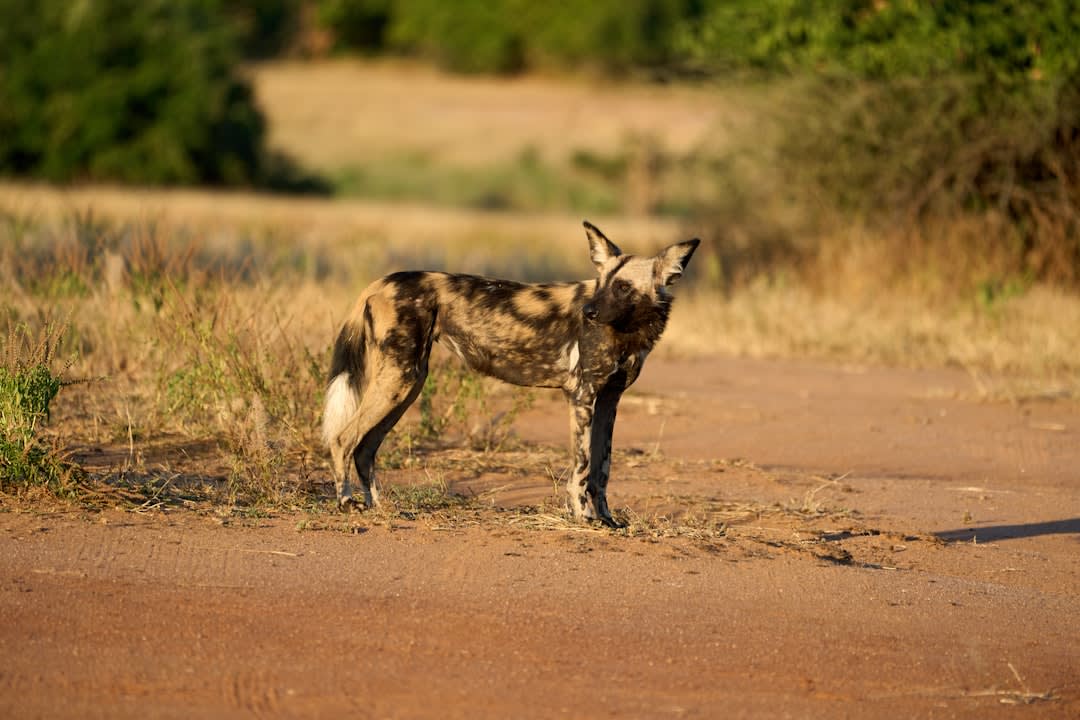
Zambia remains one of the few African countries with viable African wild dog populations, especially in the Luangwa Valley and Kafue National Park. Conservation is delivering local progress, but habitat fragmentation, snares, disease and conflict continue to threaten this endangered carnivore.
Last reviewed August 2026. Conservation data changes — see the cited sources for the latest figures.
Quick answer: what is the status of African wild dogs in Zambia?
African wild dogs (Lycaon pictus) are classified as Endangered and remain one of Africa’s most threatened large carnivores. Zambia is one of the few countries with viable populations, with wild dogs concentrated mainly in the Greater Luangwa ecosystem and Kafue National Park; one national estimate places the population at 476 individuals in 43 packs, although estimates vary by date, survey method and geographic scope [1][2].
The strongest documented recent progress is in the Luangwa Valley, where an estimate published in 2018 recorded approximately 350 adults and yearlings. That recovery has been associated with collaboration between Zambia’s Department of National Parks and Wildlife (DNPW), the Zambian Carnivore Programme (ZCP) and Conservation South Luangwa (CSL), but it does not remove the wider threats facing the species [3].
Why African wild dog conservation matters in Zambia
African wild dogs are highly social, wide-ranging predators. Packs depend on large, connected landscapes, and their low-density distribution makes reliable population monitoring difficult [2][4]. Only the dominant male and female in a pack generally reproduce, while other pack members help raise and protect pups; this social system means the loss of breeding adults or an entire pack can have consequences beyond the death of individual animals [2].
Zambia is particularly important because it retains wild dogs in two major landscapes: the Greater Luangwa ecosystem in eastern Zambia and Kafue National Park in the west [1]. The species’ remaining populations are unevenly distributed across Africa, and the IUCN has reported that wild dogs have disappeared from many countries in their former range. The IUCN’s status survey estimated between 3,000 and 5,500 wild dogs in 600–1,000 packs, while more recent conservation sources use different totals and definitions; these figures should therefore be treated as estimates rather than a precise census [4][5].
The Lower Zambezi is also significant. A study of a relatively small population in the area examined population dynamics and causes of decline, highlighting how smaller groups can represent important components of the species’ remaining habitat and diversity [6]. In June 2026, a wild dog from the Jeki Pack in the Lower Zambezi was rescued after being caught in a wire snare through a partnership involving DNPW, Painted Wolf Foundation and Conservation Lower Zambezi (CLZ) [7].
For visitors planning a Zambia safari, these landscapes offer more than a chance to see a charismatic predator. They are living conservation systems in which ranger patrols, ecological research, veterinary response and community relationships all influence whether packs can survive beyond protected-area boundaries.
The main threats to Zambia’s wild dogs
Wire snares and poaching-related injuries
Wire snares set for bushmeat can kill or seriously injure African wild dogs. They are not necessarily intended for wild dogs, but wide-ranging packs can encounter them while moving through hunting areas. The successful treatment of a snared Jeki Pack dog in the Lower Zambezi in 2026 demonstrates that snaring remains an active, practical threat rather than only a historical concern [7].
Snares can also weaken a pack by removing experienced hunters or breeding animals. In Luambe National Park, researchers use collars to locate wild dogs, check pack condition and identify whether individuals have been caught by poachers [8]. This combination of monitoring and rapid response is important because an injured dog may be difficult to find without location data.
Habitat loss and fragmentation
Wild dogs require extensive connected habitat and can range across areas covering thousands of square kilometres. Habitat fragmentation isolates subpopulations, restricts dispersal and increases the likelihood of contact with people, livestock, roads and domestic dogs [2][4]. The PopEcol research programme identifies habitat loss and fragmentation as a major threat because isolated subpopulations are more vulnerable to local extinction [9].
Protected areas remain essential, but they cannot by themselves guarantee connectivity. Wild dogs may travel beyond park boundaries while hunting, dispersing or searching for denning areas. Conservation therefore needs landscape-scale planning across national parks, game management areas and community-managed land, rather than relying only on an individual wildlife safari park.
Disease from domestic dogs
Rabies, canine distemper and parvovirus are among the diseases identified as conservation concerns for African wild dogs. Transmission from domestic dogs is particularly important where settlements, livestock areas and wild-dog habitat overlap [6][10]. Disease outbreaks can spread rapidly through closely bonded packs, making prevention and surveillance more effective than relying only on treatment after an outbreak.
The Lower Zambezi research recommended attention to domestic-dog vaccination against rabies, parvovirus and canine distemper, alongside conservation education and local participation [6]. Vaccination programmes can also provide direct public-health and domestic-animal benefits, but the research supplied here does not provide a Zambia-wide vaccination total or measured national outcome.
Conflict with people and livestock
Wild dogs occasionally come into contact with livestock and may be persecuted after suspected or confirmed livestock losses. The IUCN identifies human population growth, human activities, habitat deterioration and contact with domestic dogs and their diseases among the principal drivers of the species’ decline [4]. Research from other African landscapes also identifies retaliatory killing after livestock attacks as a major threat, illustrating why conflict prevention is relevant wherever wild dogs move outside protected areas [10].
Effective conservation must therefore address human concerns directly. Local participation, conservation education and practical measures that reduce livestock losses are not optional additions: they are part of maintaining tolerance for wild dogs in working landscapes [6][10].
Roads, prey and competition
Road mortality is recognised as a threat to wild dogs, while changes in prey availability can affect pack survival and movement [2][11]. Lions and spotted hyenas may kill wild dogs, steal their kills or disturb them at dens, although these natural interactions are part of a broader ecological picture rather than evidence that predators should be removed [11].
What is being done to conserve African wild dogs in Zambia?
Monitoring packs and movement
Conservation organisations use field observations, camera traps and GPS collars to improve knowledge of pack size, movements, den use and threats. In Luambe National Park, the Zambian Carnivore Programme is an implementing partner in wild-dog research, and collars allow researchers to locate animals and respond to potential snaring incidents [8].
Long-term data are especially valuable because wild dogs are mobile, occur at low densities and can be difficult to detect. Research on dispersal and demography aims to understand how individuals leave existing packs, form new groups and establish breeding units. The results are intended to inform spatially explicit population models and national and international management plans [9].
Partnerships in the Luangwa Valley
The Luangwa Valley’s reported increase in wild-dog numbers has been linked to coordinated work by DNPW, ZCP and CSL [3]. The Luangwa landscape includes South Luangwa National Park and surrounding areas where conservation, tourism and local livelihoods intersect. A reported estimate of approximately 350 adults and yearlings in 2018 is encouraging, but it should not be presented as a current national census or directly compared with the 476-individual national estimate without considering the different dates and boundaries [1][3].
Visitors interested in a South Luangwa safari should ask operators how they work with park authorities and conservation partners. Responsible tourism cannot replace field protection, but it can help maintain the visibility and economic value of intact wildlife landscapes.
Veterinary rescue and ranger protection in the Lower Zambezi
The 2026 rescue of the snared Jeki Pack dog involved DNPW, Painted Wolf Foundation and CLZ. The intervention shows the value of trained personnel, location data, veterinary capability and cooperation between government and conservation organisations [7]. CLZ also reported that 30 DNPW officers completed Foundation Escort Officer training in 2026, covering communication, rifle handling and safety, and encounters with dangerous animals on foot [7].
Ranger work is broader than anti-poaching patrols. It can include responding to snared animals, securing denning areas, supporting monitoring teams and maintaining relationships with communities around protected areas. The Lower Zambezi example also shows why conservation outcomes depend on rapid action after an incident, not only on preventing every threat in advance.
Community and tourism’s role
Community involvement is repeatedly identified in the research as essential to wild-dog conservation. The Lower Zambezi study recommended local participation and conservation education, while wider conservation programmes connect disease prevention and conflict reduction with benefits for people and domestic animals [6][10]. A durable approach should listen to livestock owners and other residents, recognise the costs of living alongside predators and measure whether interventions actually reduce losses.
Tourism can support this work when it is connected transparently to conservation and local economies. A wildlife safari creates demand for protected landscapes, guides, camps, transport and related services, but the presence of tourists does not automatically prove that a particular wild-dog programme is funded by every booking. Travellers should ask operators and lodges which organisations they support, whether contributions are earmarked, and how local communities benefit.
SafariFind travellers can book conservation-supporting safaris on SafariFind, while independently checking the operator’s conservation claims. Choosing established camps and guides, following viewing rules and avoiding pressure for close encounters helps reduce disturbance to packs, especially around dens.
Wild dogs are one part of a wider conservation system. Efforts to protect Zambia’s national parks also benefit habitat, prey and other threatened predators; our guide to protecting Zambia’s national parks in 2026 provides that broader context.
Results and setbacks: a balanced assessment
| Evidence | What it indicates | Important limitation |
|---|---|---|
| 476 individuals in 43 packs [1] | Zambia retains a nationally important population, mainly in the Greater Luangwa ecosystem and Kafue National Park. | The source does not establish the survey year or provide a current nationwide census method in the supplied research. |
| Approximately 350 adults and yearlings in the Luangwa Valley [3] | The Luangwa Valley has experienced several years of increasing numbers according to the 2018 report. | This is an older regional estimate, not a 2026 population figure. |
| GPS-collar research in Luambe [8][9] | Monitoring can reveal movements, pack condition, dispersal and possible snaring incidents. | Research is needed because low densities and mobility make wild dogs difficult to count. |
| Jeki Pack rescue in June 2026 [7] | Government and conservation partners can respond to snaring injuries. | A successful rescue does not remove the underlying snaring threat. |
The evidence supports cautious optimism, not complacency. Zambia has viable wild-dog populations and documented local progress, particularly in the Luangwa Valley. At the same time, the species remains Endangered, population estimates are not interchangeable, and threats including disease, habitat fragmentation, conflict, snares and roads continue to require sustained investment [1][2][3][4][7].
How travellers can help responsibly
- Choose transparent operators: Ask which DNPW-authorised areas, conservation organisations or community programmes receive support.
- Respect pack behaviour: Keep a lawful, quiet distance and never encourage a guide to block, chase or crowd wild dogs.
- Avoid den disturbance: Do not request den locations or insist on visiting dens during the breeding season.
- Support local services: Use local guides and businesses where possible, because community participation is central to long-term conservation [6].
- Share accurate information: Treat population figures as estimates and include the date and geographic area whenever discussing wild-dog numbers.
- Consider direct support: Donations to established partners such as DNPW-linked programmes, ZCP, CSL or CLZ should be made through their official channels rather than unverified intermediaries [3][7][8].
African wild dog conservation in Zambia will depend on keeping large landscapes connected, reducing preventable deaths and ensuring that communities are partners in—not bystanders to—wildlife management. The country’s current strongholds show what coordinated protection can achieve, while the snared Jeki Pack dog is a reminder that those gains remain vulnerable.
Frequently Asked Questions
Are African wild dogs endangered in Zambia?
Yes. African wild dogs are classified as Endangered, and Zambia is one of the few countries with viable populations. The main threats include habitat fragmentation, disease from domestic dogs, snares, roads and conflict with people [1][2][4].
How many African wild dogs are left in Zambia?
One conservation source estimates 476 individuals in 43 packs, mainly in the Greater Luangwa ecosystem and Kafue National Park [1]. A separate 2018 estimate recorded approximately 350 adults and yearlings in the Luangwa Valley alone [3]. These figures have different dates and geographic scopes, so they should not be combined into a single 2026 total.
Where can I see African wild dogs in Zambia?
The main reported areas are the Greater Luangwa ecosystem and Kafue National Park. Wild dogs are mobile and sightings are never guaranteed, even in important strongholds [1][2].
What is the biggest threat to African wild dogs in Zambia?
There is no single threat in every landscape. Habitat fragmentation, disease transmitted by domestic dogs, human-wildlife conflict, wire snares and road mortality all contribute to risk [2][4][6][11].
Are African wild dogs the same as African wild cats?
No. African wild dogs are canids, related to domestic dogs and wolves, while African wild cats are felids. African wild dogs are also called painted wolves or African painted dogs.
How does disease affect African wild dogs?
Rabies, canine distemper and parvovirus are identified as important disease concerns, particularly where wild dogs encounter domestic dogs. The Lower Zambezi research recommended domestic-dog vaccination and stronger local participation in conservation [6].
What organisations protect African wild dogs in Zambia?
The Department of National Parks and Wildlife, the Zambian Carnivore Programme, Conservation South Luangwa, Conservation Lower Zambezi and other partners contribute to protection, monitoring or veterinary response in different landscapes [3][7][8].
Can tourism help African wild dog conservation in Zambia?
Tourism can create economic value for protected landscapes and local services, but its conservation contribution depends on how an operator allocates funds and works with authorities and communities. Travellers should ask for transparent details rather than assume every safari payment funds wild-dog protection.
What should I do if I see wild dogs on safari?
Remain quiet, follow your guide’s instructions, keep a respectful distance and never ask the vehicle to chase or crowd the pack. Avoid disturbing den sites, where pups and adults may be especially vulnerable.
Why are GPS collars used on African wild dogs?
GPS collars help researchers locate packs, study movements and dispersal, check pack condition and respond more quickly when an animal may have been caught in a snare [8][9].