Vulture Conservation in Uganda: Status and Action in 2026
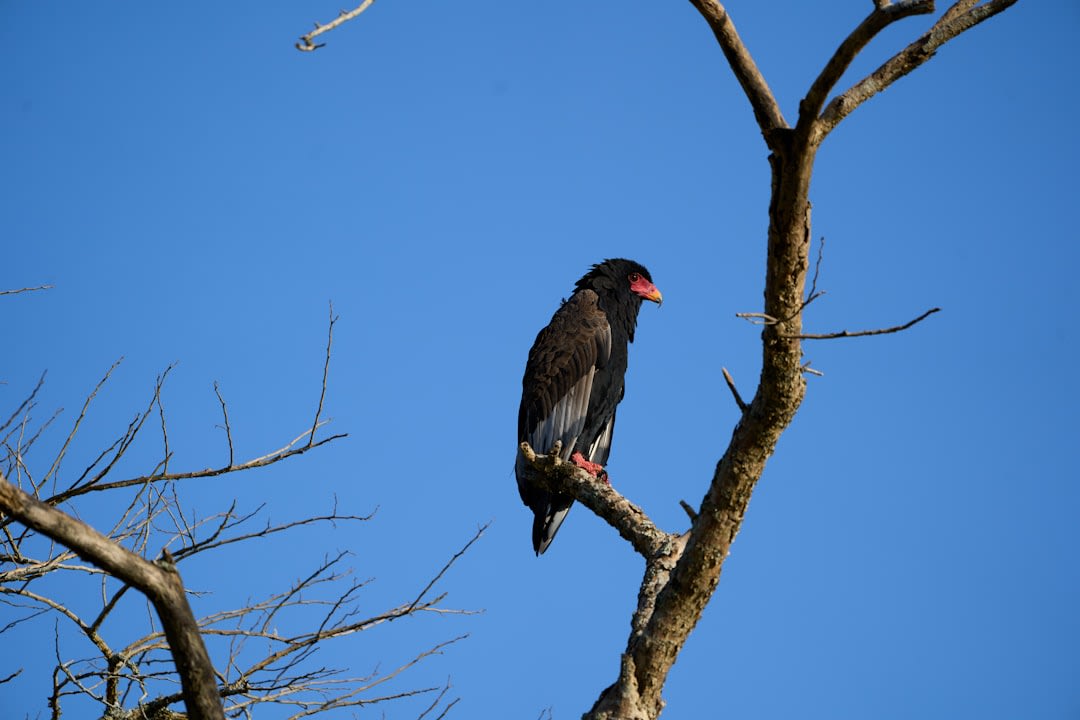
Uganda’s vultures face poisoning, habitat loss, persecution and food-supply changes, while Rüppell’s Vulture has only one known breeding site in the country. Research, tracking, community monitoring and poison-response training are guiding conservation action in 2026.
Quick answer: Vulture conservation in Uganda is focused on preventing poisoning and persecution, protecting nesting habitat, and improving monitoring across protected and urban areas. The country’s only known breeding population of Rüppell’s Vultures is in Luku Central Forest Reserve, while conservation teams are also working with Uganda Wildlife Authority, Makerere University, NatureUganda, the Wildlife Conservation Society and international partners to understand and reduce threats [1][3][5][7].
Uganda’s vultures remain under pressure, but the conservation picture is not simply one of decline. Field research, community-led nest monitoring, satellite tracking and rapid-response training are producing information that can make protection more targeted. However, there is not yet enough evidence to claim that national vulture populations have recovered [1][3][7].
Last reviewed August 2026. Conservation data changes — see the cited sources for the latest figures.
Why vulture conservation matters in Uganda
Vultures are specialist scavengers. By rapidly consuming animal carcasses, they provide natural waste-disposal and nutrient-recycling services, while helping remove potential sources of diseases including rabies, botulism and brucellosis [1]. Their role connects wildlife health, livestock management and human health, making them more than an attractive sight on a wildlife safari.
The Wildlife Conservation Society identifies the African White-backed Vulture as Uganda’s most common vulture and lists Hooded, Lappet-faced, Rüppell’s, Egyptian, White-headed and Palm-nut Vultures among the country’s other species [7]. These birds use a range of habitats, including savanna ecosystems, protected areas, forest reserves, towns and livestock-associated landscapes. Their presence in both protected and human-dominated areas means that conservation cannot rely on national parks alone [6][7].
Vultures are also an important indicator of how landscapes are managed. Poisoned carcasses, the loss of nesting trees, declining access to food and disturbance at breeding sites can affect several species at once. The international Vulture Multi-species Action Plan covers 15 Old World vulture species and aims to halt and reverse population declines between 2017 and 2029 [4]. Uganda’s conservation work forms part of this wider African and Eurasian effort.
Uganda’s Rüppell’s Vulture breeding population
Rüppell’s Vulture (Gyps rueppelli) is one of Africa’s most threatened vultures. In Uganda, the species’ only known nesting colony is located on a cliff in Luku Central Forest Reserve in the West Nile region, according to research reported by NatureUganda and Mongabay [1][5]. The colony’s restricted distribution makes the site especially important: damage or disturbance in one reserve could have consequences for the species’ breeding presence in the country.
Rüppell’s Vultures reproduce slowly. A pair produces only one chick per year, and individuals take approximately five to six years to reach breeding maturity [1]. These life-history traits mean that losses of adults, eggs or chicks cannot be replaced quickly. They also make careful monitoring essential, because a short-term increase in sightings would not necessarily demonstrate a secure breeding population.
Research led by Oruka Ivan, a Research Assistant at NatureUganda, is assessing the population status, breeding success and specific threats affecting Rüppell’s Vultures at Luku. Supported by the African Bird Club and Rufford Small Grants, the project also examines local ethno-ornithological knowledge and community perceptions [1]. A related peer-reviewed study by Oruka and colleagues examined breeding dynamics and threats at the Ugandan colony [5].
What threatens vultures in Uganda?
Poisoning and retaliatory killing
Poisoning is one of the most serious threats facing African vultures. The Peregrine Fund reports that carbamate pesticides such as Carbofuran, also known as Furadan, have been misused on livestock carcasses to kill predators such as lions and hyenas. Vultures and other scavenging birds can die when they feed on those carcasses [2].
Poisoning can also be deliberate. The Hawk Conservancy Trust reports that poachers have laced carcasses with potent poisons because vultures circling above a carcass can alert law-enforcement teams to an illegal killing. Its source states that this form of poisoning accounted for one third of recorded vulture poisonings since 1970 and had become the leading cause of vulture deaths in Africa [3]. The same source describes poisoning as difficult to prevent, making rapid detection and neutralisation important.
Ugandan stakeholders have identified both intentional and unintentional poisoning, retaliatory killing and persecution linked to sorcery or traditional medicine among the threats affecting vultures. A study of vulture strongholds in areas with high human density recorded persecution for sorcery and traditional medicine as the most frequently mentioned threats among interviews where threats were identified [6]. These findings should be interpreted as stakeholder perceptions rather than a national estimate of mortality.
Habitat loss and disturbance
Rüppell’s Vultures depend on suitable cliffs and surrounding landscapes that provide nesting security and access to food. NatureUganda reports that limited livelihood options have increased pressure on local forests through farming expansion, charcoal production and other resource-dependent activities that threaten nesting habitat around the Luku population [1]. Mongabay also reports that Luku Central Forest Reserve is under pressure because communities near the reserve depend on the area for livelihoods, including farming and charcoal production [5].
Habitat threats are not limited to Luku. The Uganda stakeholder study identified cutting of breeding or roosting trees, food shortages and water shortages among reported threats [6]. Disturbance around nests can be especially damaging during the breeding season, although the available research does not provide a national estimate of how many breeding attempts fail for this reason.
Food availability and changing landscapes
Vultures need reliable access to safe carrion. Changes in livestock practices, carcass disposal, wildlife populations and human settlement patterns can alter where food is available. The Uganda threat analysis included food shortage as an indirect threat, while earlier research on urban Hooded Vultures examined feeding areas associated with abattoirs and refuse [6][8]. Food availability must therefore be considered alongside poisoning risk: a carcass that attracts vultures may also expose them to toxic substances if it has been contaminated deliberately or accidentally.
Uganda’s wider wildlife threats
Vultures can be affected by threats that are not aimed at them directly. Wildlife poaching, conflict between livestock owners and predators, pesticide misuse, illegal killing and habitat conversion can all create dangerous carcasses or reduce safe feeding areas [2][3][6]. This is why vulture protection overlaps with broader work on human–wildlife conflict in Uganda and with law enforcement in protected landscapes.
What is being done to conserve vultures?
Research and community monitoring at Luku
NatureUganda’s Luku project is combining field research with local capacity building. Community volunteers are being trained to monitor nests, report illegal activities and raise awareness of vultures’ ecological importance. The project also includes gender mainstreaming and the study of local knowledge, with the aim of building community ownership rather than treating conservation as an activity delivered only by outside organisations [1].
This approach is particularly relevant where livelihoods depend on forest resources. Conservation measures that protect nesting habitat while recognising local needs are more likely to be workable than measures based only on restrictions. The research will also help identify which threats require urgent action, rather than assuming that every vulture site faces the same problem [1].
Tracking vultures across national parks
Satellite or other tracking technologies can reveal where vultures travel, feed and roost beyond the boundaries of a single protected area. The Hawk Conservancy Trust reports that, working with the Uganda Conservation Foundation and Uganda Wildlife Authority, teams deployed 11 tracking units on vultures across Murchison Falls, Kidepo Valley and Queen Elizabeth National Parks. A total of 13 vultures from three species were included in the tracking project [3].
Movement data can show whether birds cross into areas where poisoning, disturbance or other risks are higher. The Hawk Conservancy Trust also describes tracking as a potential early-warning system when poaching occurs, because vultures may congregate over carcasses [3]. Tracking is not a substitute for protection on the ground, but it can help conservation managers identify priority sites and responses.
Surveys in Queen Elizabeth National Park
The Wildlife Conservation Society has undertaken vulture research in Queen Elizabeth National Park (QENP). Using cattle carcasses as bait, WCS estimated a minimum of 168 vultures from four species in QENP in 2011 and was testing a mark–recapture method to assess that estimate [7]. This is a historical baseline, not a current national population count, and it should not be presented as evidence of present-day abundance.
QENP has also been associated with community-based vulture conservation education in the Vulture Multi-species Action Plan’s record of conservation activities [4]. Visitors exploring a Kyambura Wildlife Reserve or nearby Queen Elizabeth landscapes should remember that sightings depend on wider ecosystem conditions, not only on the presence of large mammals.
Urban Hooded Vulture research
Urban areas are important to Hooded Vultures, but they can also expose birds to poisoning, contaminated food and unsafe waste-management practices. A 2016 African Bird Club-funded study found Hooded Vultures in 11 of 15 Ugandan towns surveyed. Roost-time counts averaged 330 individuals, compared with 291 during feeding-time counts; Kampala accounted for 52.5% of the recorded population and Jinja for 21.7% [8]. These figures describe that study’s survey results and should not be treated as a current national census.
The Peregrine Fund is working with Makerere University and NatureUganda to track Hooded Vultures in and around Kampala, while also promoting rapid-response training for poisoning incidents and addressing risks associated with dog poisoning and livestock medication [2]. These activities illustrate the need to manage urban and rural threats together.
Results and setbacks: what does the evidence show?
| Area of action | Evidence available | What remains uncertain |
|---|---|---|
| Rüppell’s Vulture breeding | Luku Central Forest Reserve is the only known Ugandan breeding site, and NatureUganda-led research is assessing breeding success and threats [1][5]. | The research provided does not establish a secure national population or demonstrate recovery. |
| Landscape monitoring | Thirteen vultures from three species were included in a tracking project using 11 units across three national parks [3]. | Tracking coverage remains limited compared with the birds’ wider movements. |
| Queen Elizabeth National Park | WCS estimated a minimum of 168 vultures from four species in 2011 using baited surveys [7]. | The figure is a historical estimate and is not a 2026 population count. |
| Urban Hooded Vultures | The 2016 survey recorded Hooded Vultures in 11 of 15 towns, with Kampala the strongest surveyed urban centre [8]. | Urban numbers and distribution may have changed since the survey. |
| Community conservation | Volunteers are being trained to monitor nests, report illegal activity and support awareness around Luku [1]. | Long-term breeding and population outcomes have not yet been demonstrated. |
The evidence supports a cautious conclusion. Uganda has active vulture research and conservation partnerships, and several programmes are improving knowledge of threats. At the same time, Rüppell’s Vulture remains dependent on a single known breeding site, poisoning continues to be a major regional threat, and available counts are local or historical rather than a comprehensive 2026 national assessment [1][3][5][7][8].
Community and tourism’s role
Community participation is central to protecting Uganda’s vultures. Local residents are often best placed to notice nest disturbance, suspicious carcasses, illegal activity or changes in forest use. NatureUganda’s model supports community volunteers as conservation stewards and incorporates local knowledge into planning [1]. This is particularly important around Luku, where farming, charcoal production and other livelihood pressures affect the surrounding forest reserve [1][5].
Tourism can contribute responsibly when it supports protected-area management, local employment and conservation organisations, but a safari booking alone should not be described as a direct vulture-conservation donation. Travellers should ask operators how park fees, community partnerships and conservation contributions are handled. A wildlife safari park experience in Uganda may include vultures as part of the wider ecosystem, even when the itinerary is marketed around mammals.
Travellers can book conservation-supporting safaris on SafariFind, while checking the operator’s specific claims about park fees, community benefits and conservation partnerships. Vulture conservation is one part of the broader work described in organisations protecting Uganda’s wildlife.
How travellers can help responsibly
- Choose responsible operators: Ask whether the safari company uses licensed guides, follows park rules and explains how local communities benefit. Do not assume that every wildlife safari contributes to vulture research.
- Keep a safe distance from nests and roosts: Do not request off-road approaches, loud vehicle behaviour or repeated close passes near breeding birds.
- Report suspected poisoning or illegal activity: Do not touch a carcass or an injured bird. Record the location from a safe distance and notify the guide, Uganda Wildlife Authority or the relevant conservation organisation.
- Respect local livelihoods: Around forest reserves and community-managed landscapes, follow local guidance and avoid treating residents as a threat to wildlife. NatureUganda’s work shows why local stewardship and livelihood realities matter [1].
- Support credible conservation: Prefer organisations that publish their methods, identify project sites and distinguish monitoring results from long-term population recovery.
- Value the whole ecosystem: Vultures perform sanitation and nutrient-recycling functions that benefit wildlife, livestock and people [1][4]. Learning about them helps counter the negative perceptions that can undermine conservation support.
The outlook for Uganda’s vultures in 2026
Uganda’s vulture conservation priorities are clear: protect the Luku breeding site, reduce poisoning, retain nesting and roosting habitat, improve safe carcass management, and expand reliable monitoring across protected areas and towns. NatureUganda’s community research, the tracking work supported by the Hawk Conservancy Trust, WCS surveys in Queen Elizabeth National Park and urban Hooded Vulture research supported by the African Bird Club and partners provide complementary pieces of that strategy [1][3][7][8].
The principal challenge is scale. Rüppell’s Vultures reproduce slowly, the only known Ugandan breeding colony is vulnerable to local pressures, and many threats originate outside national parks [1][5][6]. Continued cooperation among Uganda Wildlife Authority, NatureUganda, Makerere University, WCS, the Uganda Conservation Foundation, community volunteers and international partners will be necessary if Uganda’s vultures are to remain part of the country’s skies and ecosystems.
Frequently Asked Questions
What is the conservation status of vultures in Uganda in 2026?
Uganda’s vultures face serious threats including poisoning, habitat loss, persecution and food-supply changes. Rüppell’s Vulture has only one known breeding site in Uganda, at Luku Central Forest Reserve, while monitoring and community conservation programmes are still expanding [1][3][5].
Where do Rüppell’s Vultures breed in Uganda?
The only known Ugandan breeding population of Rüppell’s Vultures is in Luku Central Forest Reserve in the West Nile region [1][5].
Why are vultures important to Uganda’s ecosystems?
Vultures remove animal carcasses, recycle nutrients and help reduce potential disease sources, including rabies, botulism and brucellosis [1].
What is the biggest threat to vultures in Uganda?
Poisoning is one of the most serious threats. Carcasses may be poisoned during predator control, accidentally contaminated, or deliberately laced by poachers to prevent vultures from revealing illegal kills [2][3].
Which vulture species occur in Uganda?
Species recorded in Uganda include African White-backed, Hooded, Lappet-faced, Rüppell’s, Egyptian, White-headed and Palm-nut Vultures [7].
Which Ugandan national parks are involved in vulture tracking?
A tracking project deployed 11 units across Murchison Falls, Kidepo Valley and Queen Elizabeth National Parks, covering 13 vultures from three species [3].
How many vultures were recorded in Queen Elizabeth National Park?
WCS estimated a minimum of 168 vultures from four species in Queen Elizabeth National Park in 2011 using cattle carcasses as bait. This is a historical local estimate, not a 2026 national population figure [7].
Are vultures found in Ugandan towns?
Yes. A 2016 survey recorded Hooded Vultures in 11 of 15 Ugandan towns studied. Kampala represented 52.5% of the recorded population and Jinja 21.7% in that survey [8].
How can tourists help Uganda’s vultures?
Travellers can choose responsible operators, follow wildlife-viewing rules, avoid disturbing nests, report suspected poisoning from a safe distance, and support conservation organisations that publish credible project information.
Can a Uganda wildlife safari support vulture conservation?
It can support conservation indirectly through responsible park tourism, local employment and conservation partnerships, but visitors should verify how an operator uses park fees or makes conservation contributions rather than assuming every safari funds vulture protection.