
Community Conservancies in Rwanda: Conservation in 2026
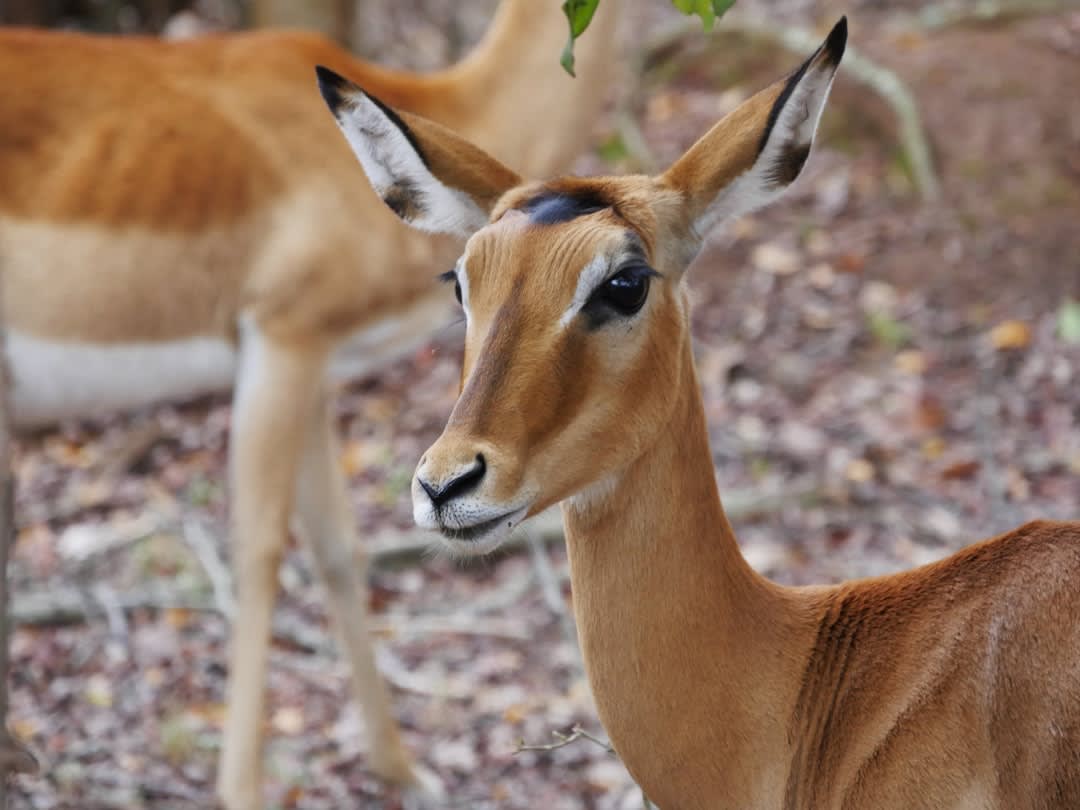
Community conservancies in Rwanda connect habitat restoration, local livelihoods and wildlife protection beyond national-park boundaries. In 2026, projects around Akagera, wetlands and forest landscapes are testing locally led models while facing land-use pressure, climate change and biodiversity loss.
Last reviewed August 2026. Conservation data changes — see the cited sources for the latest figures.
Quick answer: what are community conservancies in Rwanda?
Community conservancies in Rwanda are community-centred conservation initiatives that protect or restore habitat while creating conservation jobs, livelihood opportunities, education and local participation in wildlife management. The model is developing through projects such as the Rwanda Wildlife Conservation Association’s work around Akagera National Park, grey crowned crane wetlands and threatened species including sitatunga and shoebill. [3][5][8]
In 2026, the strongest evidence concerns restoration pilots, community employment and partnerships rather than a single national network of legally designated conservancies. Progress is real, but climate change, land-use pressure, human–wildlife conflict and continuing biodiversity loss remain significant challenges. [4][5]
Why community conservancies matter in Rwanda
Rwanda’s protected areas are surrounded by intensively used rural landscapes, so wildlife protection cannot depend only on what happens inside park boundaries. Community conservation extends attention to buffer zones, wetlands, farms and other places where people and wildlife interact. This is particularly important where habitat outside a park can provide movement routes, feeding areas or protection for species that do not remain inside one reserve. [4][5][7]
The country’s conservation experience includes mountain-gorilla protection around Volcanoes National Park, savannah conservation in Akagera National Park, and forest protection in Nyungwe and Gishwati-Mukura national parks. The African Parks process framework describes community engagement units, conservation wardens, restoration participation and decision-making forums around Gishwati-Mukura, while its Nyungwe work includes community livelihoods, tourism and ranger-based protection. [2]
Community conservancies are therefore best understood as a practical approach to shared landscapes, not simply as another category of national park. They can include locally supported habitat restoration, community rangers, conservation agreements, environmental education, cooperatives, women’s groups, youth associations and tourism or carbon-finance partnerships. The precise governance arrangement varies by site and organisation. [3][4][5][10]
Species and habitats supported by community conservation
The Rwanda Wildlife Conservation Association (RWCA), founded by Olivier Nsengimana, began with a focus on the endangered grey crowned crane. Its work combines awareness, identification and registration of cranes, rehabilitation and reintroduction of captive birds, and community engagement around key areas to reduce poaching and illegal trade. [6]
Grey crowned cranes depend on wetland and agricultural landscapes where conservation can conflict with farming needs. A partnership between the Denver Zoo Conservation Alliance and RWCA supports Community Conservation Champions across Rwanda, Uganda, Tanzania and Burundi. These local leaders monitor crane breeding sites, work with farmers, support wetland protection and help reduce human–wildlife conflict. [7]
RWCA is applying lessons from crane conservation to other threatened wildlife in Rwanda, including bats, sitatunga, shoebill and African grey parrots. Its stated programme areas include habitat restoration, illegal-wildlife-trafficking work, youth environmental education and community-based monitoring of sitatunga in wetlands. [8][9]
In the eastern landscape, the Intambwe Savannah project is testing community-centred restoration in buffer zones near Akagera National Park. The project site is approximately 4 kilometres from the park and the pilot aims to restore 40 hectares of degraded grazing land to savannah, improve habitat connectivity and diversify rural incomes. [5]
The main threats: habitat loss, conflict and climate pressure
Habitat loss and land-use pressure
Habitat loss is a recurring threat across the conservation work described by RWCA and its partners. Grey crowned cranes are threatened by habitat loss and poaching, while bats face the loss of foraging habitats and roosts. Sitatunga are hunted for meat and are disappearing from Rwanda’s wetlands, according to RWCA’s programme descriptions. [6][8]
Buffer zones can be especially important because they are working landscapes rather than strictly protected habitat. Around Akagera, limited ecological connectivity in the surrounding buffer zone has been identified as a conservation concern. The Intambwe Savannah pilot is intended to address part of that challenge, but its 40-hectare site is a demonstration project, not a solution to landscape-scale habitat fragmentation. [5]
Poaching and illegal wildlife trade
Poaching and illegal trade affect several of Rwanda’s threatened species. RWCA’s crane programme specifically seeks to reduce poaching and trade, while its broader work addresses illegal wildlife trafficking. For grey crowned cranes, community awareness is important because local knowledge of a species’ legal and conservation status can influence whether birds are protected, kept in captivity or traded. [6][8]
Available research does not provide a single current national poaching total for community conservancies in Rwanda, so it would be misleading to present one. The evidence instead points to targeted responses: community monitoring, ranger-based patrols, awareness, registration and cooperation between conservation organisations and local authorities. [2][6][7]
Human–wildlife conflict
Human–wildlife conflict is a practical issue for community conservation because households may bear the immediate cost of living beside wetlands, forests or protected areas. RWCA and the Denver Zoo Conservation Alliance are testing crop-deterrent methods with farmers to reduce crane visits to fields and crop damage. The research phase includes farmer interviews, focus groups, demonstration plots and monitoring of crane behaviour and farmer feedback. [7]
Gishwati-Mukura National Park’s community conservation team also works with local leadership to assess human–wildlife-conflict impacts and identify acceptable responses for affected households. The African Parks framework notes that replacement livelihoods may include business development, tourism guiding, cooking, alternative production or ranger work, depending on the project and community context. [2]
Climate change and biodiversity loss
Climate change adds pressure to conservation and rural livelihoods. The African Wildlife Foundation’s 2026 priorities around Volcanoes National Park include integrated landscape approaches linking land acquisition, habitat restoration, livelihoods and tourism. AWF identifies climate change, land-use pressure and persistent biodiversity loss as risks that could undermine recent progress. [4]
Carbon finance is being explored as one way to support restoration, but it is not risk-free or automatically beneficial. Intambwe Savannah was financed through the sale of carbon credits, completed the Plan Vivo Accelerator Programme in 2025 and received approval from relevant Rwandan authorities. Independent third-party validation was scheduled for mid-2026 before registration and the sale of verified credits. [5]
How Rwanda’s community conservancy programmes work
Conservation agreements and local jobs
RWCA’s 2022–2026 strategic plan sets a goal of signing 1,000 Conservation Agreements with community members by 2026. The plan also aims to double RWCA community conservation jobs from 132 in 2021 to 264 by 2026, and to deliver conservation campaigns reaching at least 65,100 people per year. These are organisational targets, not confirmed national results. [3]
The same plan identifies Umusambi Village as an education and social-enterprise site, with a target of at least 28,500 visitors over the five-year planning period and an ambition to secure at least 20% of RWCA’s annual budget through social-enterprise initiatives by 2026. Again, these figures describe planned outcomes rather than independently verified achievements. [3]
Community conservation champions and rangers
Community Conservation Champions provide a bridge between conservation organisations and households. In the crane programme supported by Denver Zoo Conservation Alliance, Champions monitor breeding sites, engage farmers and help protect wetlands. This approach makes conservation presence local and continuous rather than relying only on periodic external visits. [7]
National-park programmes use related forms of community engagement. Around Gishwati-Mukura, community conservation wardens support meetings, workshops, restoration incentives and participation in project-selection and decision-making forums. In Nyungwe, African Parks reports that the park employs rangers and links conservation investment with community livelihoods, local procurement and infrastructure work. [2]
Restoration and landscape connectivity
Restoration projects can improve habitat while creating income, but their success depends on land rights, grazing needs, maintenance and long-term finance. Intambwe Savannah’s pilot restores degraded grazing land near Akagera and is designed as a proof of concept for a wider local conservancy model. Its stated ambition is to develop transferable governance and technical approaches that could be scaled within Rwanda and potentially elsewhere in East Africa. [5]
AWF’s 2026 approach similarly emphasises systems-level transformation: connecting habitat restoration and livelihoods, strengthening cooperatives, women’s groups and youth associations, and embedding conservation objectives in national and decentralised governance. [4]
Community tourism and the economics of conservation
Tourism can support community conservation when revenue is transparent, reaches local priorities and is combined with meaningful participation. Rwanda’s tourism revenue-sharing programme began in 2005 under the Rwanda Development Board, returning 5% of foreign-exchange earnings from park visitation to communities adjacent to national parks; the share increased to 10% in 2017. [1]
Research around Nyungwe recorded 136 tourism-revenue-sharing projects across neighbouring sectors between 2005 and 2017. The projects were intended to improve community enterprises, reduce dependence on park resources and increase participation in conservation. However, a separate study of Volcanoes National Park found that overall integrated conservation-development investment was associated with lower unauthorised resource use, while tourism revenue-sharing funding alone did not show the same effect; the researchers identified gaps between revenue-sharing investment and illegal-activity hotspots. [1][11]
This is an important qualification for anyone planning a 7-day Akagera National Park safari or another wildlife safari in Rwanda. Paying park fees and permits contributes to the tourism economy, but the benefit to conservation depends on how funds are allocated, whether local people influence decisions and whether projects address actual pressures. Tourism should complement, not replace, public conservation budgets and community rights.
Travellers considering a wildlife safari park experience should also distinguish between visiting a national park and visiting a community-led conservation project. A park excursion may generate entrance or activity revenue; a conservancy or community project may depend more directly on local guides, accommodation, crafts, food, restoration visits or donations. Ask the operator to explain the mechanism rather than assuming every tourism payment has the same conservation impact.
Results and setbacks in 2026
Several results are encouraging. Tusk reports that RWCA’s grey crowned crane work has helped stop the illegal trade in cranes in Rwanda and that the population has nearly tripled since the beginning of the organisation’s intervention. The claim is attributed to Tusk’s profile of Olivier Nsengimana and should be read alongside the continuing threats of habitat loss, poaching and human–crane conflict. [9]
RWCA’s wider partnership model is also producing practical conservation capacity. Tusk reports 201 local people employed, 6,736 hectares protected and 1,268 community beneficiaries for the RWCA project, although the source does not specify a measurement date or define precisely how these totals were calculated. Those figures are therefore useful indicators of reported programme reach, not a national measure of Rwanda’s community-conservancy footprint. [6]
Other progress remains at pilot or target stage. Intambwe Savannah had begun initial restoration, including tree planting, during 2025, with third-party carbon validation scheduled for mid-2026. RWCA’s strategic plan sets quantified employment, conservation-agreement and education goals through 2026, while AWF describes 2026 as a year for scaling integrated landscape solutions. [3][4][5]
The setbacks are equally important: land-use pressure, climate change and biodiversity loss remain unresolved; conflict can impose costs on farmers; and conservation funding may not reach the places where illegal activity is concentrated. The evidence supports cautious optimism, not a claim that community conservancies have solved Rwanda’s conservation challenges. [1][2][4][7]
How travellers can help responsibly
- Choose transparent operators. Ask how park fees, community payments, guide fees and conservation donations are distributed. For trip-planning context, compare a Rwanda safari cost guide with the operator’s explanation of what is included.
- Use local services. Select locally owned accommodation, community guides, cooperatives and cultural experiences where possible. Local spending does not automatically equal conservation funding, but it can strengthen the livelihood side of a community-conservation model when the business relationship is fair. [2][4][10]
- Respect wildlife and wetlands. Keep distance, follow guide instructions, avoid disturbing breeding sites and never buy wildlife or products made from protected species. Grey crowned cranes and other threatened animals are affected by illegal trade and disturbance. [6][7]
- Support credible organisations. Consider donating to or learning from organisations named in the research, including RWCA, African Parks, AWF and the Denver Zoo Conservation Alliance. Check current programme information before donating because projects, partners and funding needs change. [2][4][7][8]
- Book with conservation in mind. Travellers can book conservation-supporting safaris on SafariFind, while independently checking the operator’s community and conservation claims.
Conclusion
Rwanda’s community conservancy approach is evolving through locally focused organisations, restoration pilots, conservation agreements, community jobs, tourism revenue sharing and partnerships with farmers, cooperatives, women’s groups and young people. Its clearest contribution is to bring conservation into the landscapes where people live and where wildlife protection succeeds or fails beyond park borders. [1][3][4][5]
The 2026 picture is promising but incomplete. Grey crowned crane conservation demonstrates the potential of community-led action, while Akagera buffer-zone restoration shows how habitat and livelihoods can be addressed together. Yet durable results will require long-term finance, transparent benefit-sharing, fair responses to conflict, reliable monitoring and genuine local decision-making. [2][5][7][9]
Frequently Asked Questions
What are community conservancies in Rwanda?
They are community-centred conservation initiatives that combine habitat protection or restoration with local jobs, livelihoods, education and participation in wildlife management. Rwanda’s examples include RWCA’s crane and wetland work and the Intambwe Savannah restoration pilot near Akagera National Park. [3][5][8]
How effective are community conservancies in Rwanda in 2026?
They show encouraging but site-specific results. Tusk reports that RWCA’s grey crowned crane programme helped stop illegal crane trade in Rwanda and that the population nearly tripled, while other projects remain pilots or 2026 targets rather than independently verified national outcomes. [3][5][9]
Which species benefit from community conservation in Rwanda?
Priority species include grey crowned cranes, sitatunga, shoebill, bats and African grey parrots. RWCA and its partners also support habitat restoration and community engagement for threatened wildlife and wetlands. [7][8][9]
What are the main threats to Rwanda’s community conservancies?
The main threats identified in the research are habitat loss, poaching and illegal wildlife trade, human–wildlife conflict, land-use pressure, climate change and persistent biodiversity loss. [4][6][7][8]
How much tourism revenue goes to communities in Rwanda?
Rwanda’s tourism revenue-sharing programme began by returning 5% of relevant park-visitation earnings to communities near national parks; the share increased to 10% in 2017. The effect depends on project quality, local participation and whether funding reaches conservation hotspots. [1][11]
What are the costs and experiences of gorilla trekking in Rwanda?
The supplied research does not provide current gorilla-trekking prices or a reliable cost breakdown. It does show that tourism revenue sharing has been used in Rwanda since 2005 and that conservation-development investment around Volcanoes National Park has been studied in relation to unauthorised resource use. [1][11]
How Much Does a Rwanda Safari Cost: a Quick Budget Guide to Visiting Rwanda?
The supplied conservation research does not establish a current Rwanda safari price. Costs vary by park activities, accommodation, transport, permits and operator, so travellers should request an itemised quotation and ask separately how community and conservation contributions are handled.
How much do a community guide charge for hiking at Mt. Longonot?
Mt. Longonot is not covered by the supplied Rwanda conservation research, so no reliable community-guide charge can be given here. Travellers should check current official park and guide information for the destination they plan to visit.
How can tourists support community conservancies in Rwanda?
Use transparent operators, spend with locally owned businesses and community guides, respect wildlife and wetlands, and support credible organisations such as RWCA, African Parks, AWF or the Denver Zoo Conservation Alliance after checking current programme information. [2][4][7][8]
Can carbon credits fund community conservation in Rwanda?
They can provide a potential finance stream. Intambwe Savannah near Akagera was developed with carbon-credit finance, began initial restoration in 2025 and was scheduled for independent third-party validation in mid-2026 before verified credits could be sold. [5]
Rwanda vs South Africa Safari: Safety, Cost & Wildlife 2026
The supplied research does not provide a comparative safety, cost or wildlife analysis for Rwanda and South Africa. It does document Rwanda’s community-conservation work around wetlands, Akagera, Volcanoes and other protected landscapes. [2][4][5][8]


