 Ask Tembo
Community Conservancies in Botswana 2026: Conservation, Livelihoods & Impact

Community-based natural resource management (CBNRM) has empowered Botswana's local communities to manage 18 protected areas spanning over 10.9 million hectares, generating measurable wildlife recovery and sustainable livelihoods while facing funding pressures and institutional challenges.
Quick Answer
Community conservancies in Botswana are locally-managed protected areas where Indigenous peoples and resident communities hold decision-making power over wildlife and natural resources. Through Botswana's Community-Based Natural Resource Management (CBNRM) policy framework—adopted in 1999 and currently under review—18 community-managed areas now cover approximately 10.9 million hectares (27% of the country).[1] These conservancies have stabilized wildlife populations, reduced poaching through community ranger networks, and generated sustainable income for over 13.6 million people across Africa's community conservation landscape.[2] However, they face a critical funding gap: external donor support has declined significantly in recent years, and communities struggle to transition from grant-dependent models to self-sustaining operations.[3]
Why Community Conservancies Matter in Botswana
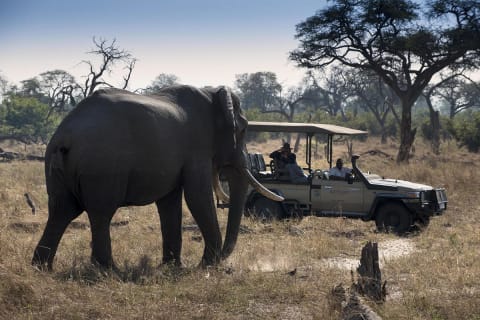
Botswana's landscape tells a conservation story unlike many African nations. While African elephants and other megafauna roam some of the continent's largest remaining wilderness areas, the future of these species depends not on government rangers alone, but on the goodwill and stewardship of the communities living alongside them.
Community conservancies represent a fundamental shift in conservation philosophy: instead of excluding people from protected areas, Botswana's CBNRM approach devolves resource management rights and responsibilities directly to resident communities.[4] This model recognizes a critical reality—across Africa, more than 65% of wildlife exists on community and private land, not in national parks.[5] In Botswana, the approach has created a network of locally-governed Wildlife Management Areas (WMAs) adjoining protected areas, managed by Community-Based Organisations (CBOs) that operate as the functional equivalent of conservancies in other Southern African countries.[3]
The philosophy is simple but powerful: when communities own the conservation outcome and share its benefits, wildlife transforms from a liability (crop-raiding elephants, livestock-killing lions) into a shared asset. Communities become the first line of defense against poaching, habitat degradation, and human-wildlife conflict—and they do it because they have economic incentive and cultural investment in the outcome.
The Conservation Landscape: Botswana's CBNRM Framework
Botswana's formal commitment to community-based conservation began with the 1999 CBNRM policy, now under government review to strengthen climate adaptation and institutional capacity.[4] The framework operates through a decentralized structure:
- 18 designated Community-Based Organisations manage wildlife across multiple WMAs[1]
- 10.9 million hectares under community management—roughly 27% of Botswana's land area[1]
- Coordination support from the Botswana Community-Based Organisation Network (BOCOBONET), which serves as an umbrella advocacy body and communication forum for member organizations[3]
- Policy alignment with Botswana's National Climate Change Response Strategy, which emphasizes building climate resilience in natural resource sectors and conservation efforts for carbon sequestration[4]
Unlike neighboring Namibia—which formally designates 39 "conservancies" with explicit legal status—Botswana's WMAs function as conservancies in practice, though the terminology differs. The distinction is important for understanding how international funding mechanisms and best-practice networks classify Botswana's work.[3]
What Threatens Community Conservancies Today
The Funding Crisis
The most immediate threat to Botswana's community conservancies is not poaching or habitat loss—it is financial collapse. In 2012–2013, external donor financing represented a significant amount of support for Botswana's Ministry of Environment, Wildlife and Tourism (MEWT), which manages the protected area estate. External financing assistance was estimated at approximately USD 15 million in 2013, representing about 15% of total MEWT annual expenditures.[1] However, donor support for Botswana has decreased considerably in recent years.[3] Local NGOs lack strong independent funding bases, and government has not adequately filled the funding gap left by departing donors.[3]
This creates a vicious cycle: donor grants historically funded ranger salaries, vehicle maintenance, office operations, and community equity stakes in joint-venture lodge development.[3] As those grants dried up, conservancies were expected to become self-sustaining through tourism revenue and sustainable use income (trophy hunting, wildlife product sales). But tourism revenue fluctuates with global demand, and Botswana's ban on trophy hunting—introduced in 2014—eliminated a major income stream for organizations like the Sankuyo Management Trust, one of Botswana's most successful CBOs, which had to retrench 62 employees and halt community projects including household sanitation improvements and funeral assistance.[3]
Institutional Capacity & Governance
While field experience has shown that communities can develop strong resource management institutions, they require considerable institutional support to do so.[3] NACSO (the Namibian Association of CBNRM Support Organisations) and its regional partners have documented that developing and emerging conservancies—particularly those in their first decade—need quality technical support, governance training, and financial planning assistance that NGOs and government struggle to provide given resource constraints.[6]
Additionally, the institutional support base for CBNRM in Botswana remains relatively weak, despite two decades of implementation.[3] Leadership turnover, limited accounting capacity, and governance disputes within some CBOs have delayed conservation outcomes and reduced community trust in benefit-sharing mechanisms.
Human-Wildlife Conflict & Predator Pressure
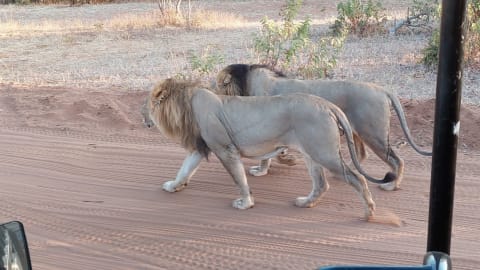
Community conservancies exist at the frontline of human-wildlife coexistence. Elephants raid crops, lions kill livestock, and conflict can quickly erode community support for conservation. Historically, such conflicts led to retaliatory killings of predators—reducing wildlife populations and undermining conservation goals.[5] In northern Botswana, lion populations faced particular pressure from defensive killings by herders protecting their stock.
How Community Conservancies Protect Wildlife & Reduce Conflict
Community Ranger Networks & Technology
The most visible conservation tool is the community ranger—typically a local resident trained and equipped to conduct wildlife patrols, monitor populations, and deter poachers. These rangers are the backbone of anti-poaching efforts in Botswana.
In the CLAWS (Communities Living Among Wildlife Sustainably) Conservancy in northern Botswana, rangers have deployed GPS-collared lions with virtual-fence technology that triggers real-time predator alerts to farmers' mobile phones when lions approach their settlements.[5] This innovation has proven transformative: after the introduction of alerts, local lion killing fell by almost 90 percent.[5] Herders can now protect livestock and families without resorting to lethal action against big cats—fundamentally changing the conservation calculus.
Similarly, in southwest Botswana, Akashinga (in partnership with Kalahari Research and Conservation) is supporting and empowering local community scouts to protect 5 million acres of the Greater Kgalagadi Transfrontier Area.[7] Akashinga's plant-based, all-female ranger model brings a community-centered approach to anti-poaching work, combining training, employment, and ecosystem restoration.
Tourism Revenue & Sustainable Use
Community conservancies generate income through multiple channels: tourism concessions, wildlife viewing fees, sustainable harvesting of game meat, and joint-venture lodge partnerships. This revenue is then reinvested in ranger salaries, community projects (schools, clinics, water systems), and conservation operations.[3] When tourism works, it creates powerful economic incentive for communities to protect wildlife rather than exploit it.
Travelers booking Botswana safari lodges and guided wildlife experiences often stay in or near community conservancy areas; their fees directly support ranger employment and conservation operations. This link between international tourism demand and local conservation outcomes makes sustainable safari tourism a material conservation tool.
Regional Coordination & Transboundary Conservation
Several community conservancies in Botswana are part of larger transboundary conservation complexes, maintaining important wildlife movement corridors between Botswana and Namibia, between Botswana, Namibia and Angola, and between Botswana, Namibia and Zambia.[3] This landscape-scale coordination is essential for species like elephants and wildebeest, which migrate across international borders and require protected corridors to sustain viable populations.
International Support & Flagship Programmes
UNESCO's COMPACT Programme in Okavango Delta
The Okavango Delta World Heritage site—one of Botswana's crown jewels—has launched the Community Management for Protected Areas for Conservation (COMPACT) programme with support from UNESCO, UNDP, the Government of Botswana, and local partners.[8] COMPACT provides demand-driven small grants to community-based organisations, aiming to enhance engagement of Indigenous peoples and local communities in shared conservation and governance of the UNESCO World Heritage site while supporting sustainable livelihoods.[8]
COMPACT represents four years of cooperation among UNESCO, UNDP and its GEF Small Grants Programme, the Government of Botswana, and local partners, specifically focused on empowering communities and ensuring their involvement in management and development activities.[8] The programme is co-funded by the Flanders Trust Fund at UNESCO (Kingdom of Belgium) and receives ongoing support from contributions by the Government of Norway to the World Heritage Fund.[8] Its focus on the panhandle area of the Okavango Delta demonstrates how international conservation funding can be channeled directly to community organizations for locally-led conservation action.
Maliasili's Pan-African Support Network
Maliasili, a pan-African conservation network, is strengthening and supporting nearly 60 local organisations working in community-based conservation across 16 countries, including Botswana.[2] Since its inception 15 years ago, Maliasili has:
- Supported 75 organisational strategic plans[2]
- Trained 237 conservation leaders[2]
- Raised and leveraged over USD 27 million for its partners[2]
- Helped local organisations collectively work across 64 million hectares of high-biodiversity ecosystems and reach 13.6 million people[2]
- Helped generate USD 12 million annually for communities sustainably managing forests, rangelands and waters[2]
With support from the Trafigura Foundation, Maliasili is intensifying its support for conservation organisations in five countries including Botswana, Mozambique, Tanzania, Uganda and Zimbabwe.[2] This regional approach recognizes that community conservation requires not just project funding but sustained institutional strengthening—training leaders, improving governance, and building financial resilience.
Measurable Conservation Outcomes
Wildlife Population Stabilization
Conservation efforts across Botswana have significantly contributed to stabilizing and increasing local wildlife populations through habitat preservation, anti-poaching measures, and community engagement.[9] African elephants in Botswana have recovered to over 50,000 individuals in Chobe National Park alone—the largest elephants by body size of all living elephants—thanks in part to protected area networks and reduced poaching pressure.[10]
Community-based conservation projects have empowered local communities to participate actively in wildlife protection, leading to increased awareness and reduced poaching incidents.[9] Research on wildlife movements, such as GPS tracking of lions and other predators, helps communities understand and mitigate human-wildlife conflicts while ensuring coexistence of local populations with wildlife.[9]
Reduced Poaching & Predator Killing
The CLAWS Conservancy's near-90% reduction in local lion killing demonstrates the direct conservation impact of combining technology, community engagement, and economic incentive.[5] When herders receive real-time alerts and have access to alternative predator management tools (improved livestock pens, livestock insurance, compensation schemes), they no longer default to lethal control of wildlife.
This outcome matters for apex predator conservation: lions and other large carnivores face extinction pressure across Africa, and community-level tolerance for their presence is essential for landscape-scale survival.
Livelihoods & Benefit Sharing
While Botswana's CBNRM data on total income generation is less comprehensive than Namibia's (where NACSO documented growth from less than N$ 1 million in 1998 to more than N$68 million in 2013 across conservancies),[3] field evidence confirms that successful CBOs distribute cash income to residents through employment (particularly ranger positions), the sale of wildlife products, and in-kind benefits (distribution of harvested game meat, access to improved water and sanitation, school scholarships).[3] The Sankuyo Management Trust, before the trophy hunting ban, was distributing substantial benefits to member communities—evidence that when conservancies function well, local populations see tangible economic return from conservation.
Current Challenges & Setbacks
The Trophy Hunting Ban & Revenue Loss
In 2014, Botswana introduced a ban on trophy hunting, intended to shift the country's conservation and tourism model away from hunting-based revenue. However, the ban created an immediate financial crisis for hunting-revenue-dependent conservancies. The Sankuyo Management Trust, described as "one of the most successful CBNRM organisations in Botswana," had to retrench 62 employees and halt various community projects including improved sanitation, scholarships, and funeral assistance.[3] This case illustrates a critical challenge: policy shifts designed to improve conservation can destabilize community institutions if alternative revenue streams are not developed in parallel.
Donor Dependence & Institutional Fragility
Throughout BOCOBONET and partner NGO histories, funding has depended heavily on external donors such as USAID, the Millennium Challenge Corporation, and WWF.[6] As donor priorities shift (often toward climate change, biodiversity loss in other regions, or political changes in donor countries), Botswana's community conservancies face sudden withdrawal of financial support. The institutional support base for CBNRM remains relatively weak, and many developing and emerging conservancies are not yet financially viable without external grants.[3][6]
Governance & Transparency Concerns
While not detailed in recent impact reports, field experience across Africa's CBNRM landscape indicates that some community organisations struggle with transparent governance, equitable benefit distribution, and accountability to member communities.[3] Leadership disputes, inadequate financial management systems, and elite capture (where leaders disproportionately benefit while ordinary community members see little return) can undermine conservation outcomes and community support.
How Travelers Can Support Community Conservancies Responsibly
Choose Community-Based Safari Lodges & Guides
When planning a Botswana safari, prioritize lodges and tourism operators that are directly owned or operated by community conservancies, or that have transparent benefit-sharing agreements with local organisations. Ask lodges:
- What percentage of your fees goes directly to the community conservancy?
- How many local residents do you employ, and in what roles?
- Can you show us the community benefit-sharing agreement?
- What conservation or development projects has this lodge funded in the community?
Transparency in these relationships ensures your safari spending genuinely supports conservation and livelihoods.
Engage with Community Rangers & Anti-Poaching Efforts
Many community conservancies offer guided walks, wildlife monitoring activities, or ranger talks where visitors can learn directly from community rangers about conservation challenges and successes. These interactions support ranger employment, build international awareness of community conservation work, and create cultural exchange that often deepens visitor commitment to conservation.
Support Conservancy-Led Tourism Initiatives
Look for tourism experiences explicitly branded as community-led or community-owned. In the Greater Kgalagadi Transfrontier Area, for example, tourism revenue supports Kalahari Research and Conservation's community scout program. In the Okavango Delta, COMPACT-supported community organisations are developing sustainable tourism activities that generate income while protecting the World Heritage site.
Advocate for Policy Support
Share what you learn from community conservancies with your networks. Advocate to your government representatives for continued international support to community conservation in Botswana—whether through bilateral development aid, multilateral conservation funding, or trade policies that incentivize sustainable wildlife tourism. Community conservancies depend on predictable, long-term funding; individual voices from travelers and conservation advocates help sustain political will for that investment.
Book Through Responsible Platforms
SafariFind makes it possible to search and book safari lodges and experiences with transparency about conservation impact. When booking your Botswana safari, filter for conservancy-partnered operators and read reviews that mention community engagement and conservation outcomes.
The Future of Community Conservancies in Botswana
Botswana's CBNRM framework stands at a crossroads. Two decades of implementation have demonstrated that communities can be effective conservation stewards—reducing poaching, stabilizing wildlife populations, maintaining transboundary corridors, and generating sustainable income for rural populations. The COMPACT programme in Okavango Delta, Akashinga's work in the Kgalagadi, and the CLAWS Conservancy's GPS-collar innovation show that community conservancies are evolving, adopting new technologies, and scaling impact.
However, the current institutional support base is fragile. External donor funding has declined; some conservancies remain financially dependent on grants; and policy shocks (like the trophy hunting ban) can destabilize even successful organisations. For community conservancies to thrive in the next decade, Botswana needs:
- Diversified, predictable funding beyond donor grants—including government budget allocations, conservation trust funds, and climate finance mechanisms
- Institutional strengthening for governance, financial management, and leadership development
- Alternative revenue streams to replace lost trophy hunting income—including carbon finance, biodiversity offsets, and premium sustainable tourism
- Regional coordination to maintain transboundary conservation corridors and share best practices across Botswana, Namibia, and neighboring countries
- Climate adaptation integration as Botswana's CBNRM policy is reviewed to align with climate change resilience goals
The 1999 CBNRM policy, currently under government review, offers an opportunity to embed these lessons and modernize the framework for the next 25 years. If Botswana can transition community conservancies from grant-dependent to financially resilient institutions while maintaining community ownership and benefit-sharing, the model will become a continental exemplar—proving that conservation and development are not competing goals but complementary outcomes when communities lead.
Last reviewed July 2026. Conservation data changes — see the cited sources for the latest figures.
Frequently Asked Questions
What is a community conservancy in Botswana?
A community conservancy in Botswana is a locally-managed protected area where resident communities hold decision-making power over wildlife and natural resources. Botswana's formal CBNRM (Community-Based Natural Resource Management) programme operates through 18 designated Community-Based Organisations (CBOs) managing Wildlife Management Areas (WMAs) adjoining protected areas, covering approximately 10.9 million hectares or 27% of the country's land area. Unlike formally titled "conservancies" in Namibia, Botswana's WMAs function as conservancies in practice, giving communities ownership of conservation outcomes and the right to benefit from sustainable use of wildlife.
How do community conservancies help reduce poaching in Botswana?
Community conservancies reduce poaching through trained community ranger networks, anti-poaching patrols, and increasingly, technology like GPS-collared predators with virtual-fence alerts. In the CLAWS Conservancy in northern Botswana, GPS collars on lions trigger real-time mobile alerts to nearby farmers and herders when animals breach virtual boundaries, enabling livestock protection without lethal predator control. Rangers conduct regular patrols to monitor wildlife populations, deter poachers, and gather data on conservation status. By giving communities economic incentive (through tourism revenue and sustainable harvesting) and employment (ranger positions), conservancies align local interests with wildlife protection.
What funding supports community conservancies in Botswana?
Community conservancies historically received funding from external donors (USAID, World Bank, GEF, bilateral aid), government grants, and self-generated income through tourism, sustainable wildlife harvesting, and joint-venture lodge partnerships. In 2013, external financing to Botswana's Ministry of Environment, Wildlife and Tourism was estimated at approximately USD 15 million, representing about 15% of total annual expenditures. However, donor support has declined considerably in recent years. Many conservancies now struggle with a funding gap, as government has not adequately filled the gap left by departing donors, and tourism revenue fluctuates with global demand. The trophy hunting ban (2014) eliminated a major income source for hunting-dependent conservancies like Sankuyo Management Trust.
How much income do community conservancies generate for local people?
While comprehensive Botswana-specific figures are limited, field evidence shows successful CBOs distribute cash income through ranger employment, wildlife product sales, and in-kind benefits such as game meat distribution, water and sanitation improvements, and school scholarships. Before the trophy hunting ban, the Sankuyo Management Trust was one of Botswana's most successful CBOs, generating sufficient income to support community projects. Across Africa's broader community conservation landscape, Maliasili reports that local organisations help generate USD 12 million annually for communities sustainably managing forests, rangelands and waters. Income generation remains highly dependent on tourism demand and conservancy financial management capacity.
What international organisations support Botswana's community conservancies?
Key international supporters include UNESCO and UNDP (through the COMPACT programme in Okavango Delta), Maliasili (which strengthens nearly 60 community organisations across 16 African countries including Botswana), Akashinga (supporting community scouts in the Greater Kgalagadi Transfrontier Area), and traditional donors like USAID, the World Bank, and WWF. UNESCO's COMPACT programme provides demand-driven small grants to community-based organisations and is co-funded by the Flanders Trust Fund (Belgium) and supported by contributions from the Government of Norway. Maliasili has trained 237 conservation leaders and raised over USD 27 million for community conservation partners across Africa.
How has the trophy hunting ban affected community conservancies in Botswana?
Botswana's 2014 trophy hunting ban created a financial crisis for hunting-revenue-dependent conservancies. The Sankuyo Management Trust, described as one of Botswana's most successful CBOs, had to retrench 62 employees and halt community projects including household sanitation improvements, scholarships, and funeral assistance after the ban eliminated its primary income source. The ban was intended to shift conservation and tourism toward non-consumptive models, but alternative revenue streams (premium sustainable tourism, carbon finance, biodiversity offsets) were not developed in parallel. This illustrates how policy changes designed to improve conservation can destabilize community institutions if income diversification is not planned.
What is the COMPACT programme in Okavango Delta?
The Community Management for Protected Areas for Conservation (COMPACT) programme is a UNESCO-supported initiative in the Okavango Delta World Heritage site that provides demand-driven small grants to community-based organisations. COMPACT aims to enhance engagement of Indigenous peoples and local communities in shared conservation and governance of the World Heritage site while supporting sustainable livelihoods. The programme is a result of four years of cooperation among UNESCO, UNDP and its GEF Small Grants Programme, the Government of Botswana, and local partners. It is co-funded by the Flanders Trust Fund at UNESCO (Kingdom of Belgium) and supported by contributions from the Government of Norway to the World Heritage Fund.
Can tourists help support community conservancies in Botswana?
Yes. Travelers can support community conservancies by choosing lodges and operators directly owned or partnered with community conservancies, asking about benefit-sharing agreements and percentage of fees going to local organisations, engaging with community rangers and conservation activities, and booking through responsible platforms that prioritize conservancy partnerships. When you book a safari in a community conservancy area, your lodge fees directly support ranger employment, conservation operations, and community development projects. Engaging with community rangers and anti-poaching activities also builds international awareness of conservation challenges and creates cultural exchange that strengthens global support for community-led conservation.
What are the main challenges facing community conservancies in Botswana?
The primary challenges are: (1) funding decline—external donor support has decreased significantly, and government has not filled the gap, leaving many conservancies financially fragile; (2) institutional capacity—developing conservancies lack governance, financial management, and leadership training; (3) revenue shock—the trophy hunting ban eliminated income for some conservancies without providing alternative revenue sources; (4) sustainability—many conservancies remain dependent on external grants rather than self-sustaining operations; and (5) governance concerns—some organisations struggle with transparent benefit distribution and accountability to member communities. Long-term viability requires diversified, predictable funding and institutional strengthening.
How does Maliasili support community conservancies in Botswana?
Maliasili, a pan-African conservation network, strengthens and supports nearly 60 local organisations working in community-based conservation across 16 countries, including Botswana. Since its inception 15 years ago, Maliasili has supported 75 organisational strategic plans, trained 237 conservation leaders, and raised and leveraged over USD 27 million for its partners. Collectively, these local organisations work across 64 million hectares of high-biodiversity ecosystems and reach 13.6 million people, helping generate USD 12 million annually for communities sustainably managing forests, rangelands and waters. With support from the Trafigura Foundation, Maliasili is intensifying its support for conservation organisations in Botswana and four other countries.
What is the CLAWS Conservancy and how does it reduce lion killing?
The CLAWS (Communities Living Among Wildlife Sustainably) Conservancy in northern Botswana uses GPS-collared lions with virtual-fence technology to reduce defensive killing of predators. When lions approach a virtual boundary near communities, GPS collars trigger real-time predator alerts sent to farmers' and herders' mobile phones. This enables communities to protect livestock and families without lethal predator control. After introduction of the alerts, local lion killing fell by almost 90 percent. The innovation demonstrates how combining community ranger networks, technology, and economic incentive can transform human-wildlife conflict from a conservation threat into a coexistence success.
What percentage of Botswana is managed by community conservancies?
Community-based natural resource management (CBNRM) covers approximately 10.9 million hectares under 18 designated Community-Based Organisations managing Wildlife Management Areas, representing roughly 27% of Botswana's total land area. This makes community conservancies a substantial portion of Botswana's conservation estate, comparable in scale to the national protected area system. The extensive coverage underscores why community stewardship is essential to Botswana's wildlife conservation outcomes—the majority of the country's wildlife habitat depends on community management.
Trips that match this guide