
Cheetah Conservation in Zimbabwe (2026): Status and Solutions
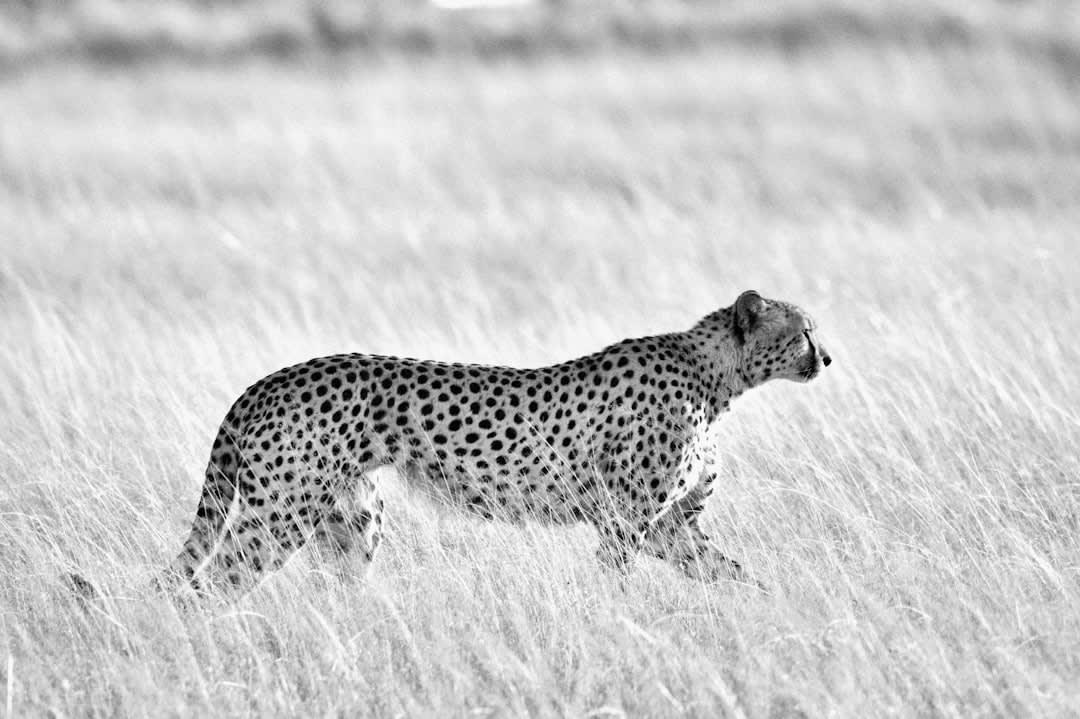
Cheetah conservation in Zimbabwe faces an uncertain population outlook: a recent preliminary assessment estimated 83 adult cheetahs nationwide, while an earlier CITES submission estimated 1,500 individuals. Protected areas, landscape connectivity, research and community coexistence are central to the species’ future.
Quick answer: Cheetahs (Acinonyx jubatus) remain a nationally important but vulnerable conservation priority in Zimbabwe. The country’s cheetah population is difficult to estimate: a recent preliminary assessment suggested 83 adult cheetahs, while an earlier CITES document gave an estimate of 1,500 cheetahs. These figures are not directly comparable because they refer to different dates, methods and population categories. [1][2]
Conservation in 2026 is focused on protecting remaining populations, improving monitoring, reducing conflict with livestock producers, maintaining connected habitat and strengthening cooperation across southern Africa. Zimbabwe’s national action plan for cheetahs forms part of this wider effort. [3]
Last reviewed August 2026. Conservation data changes — see the cited sources for the latest figures.
Why cheetah conservation matters in Zimbabwe
Zimbabwe is one of the few remaining range countries for the southern African cheetah, a subspecies occurring across Namibia, Botswana, Zimbabwe, Zambia, Mozambique and South Africa. Southern Africa is one of the species’ most important remaining strongholds, but populations are increasingly fragmented by expanding human land use. [4]
Cheetahs are wide-ranging predators. Scientific studies have documented home ranges exceeding 3,000 km² and movements by translocated animals of more than 1,000 km. Their naturally low population densities mean that even apparently large landscapes may support relatively few animals. [5] This makes isolated sightings an imperfect measure of population health: a cheetah may use several properties, protected areas or national borders during its lifetime.
Zimbabwe’s key landscapes include Hwange National Park and the Matetsi–Victoria Falls area in the west, the Zambezi Valley, and southern areas such as the Tuli Circle and Bubi Valley. Preliminary monitoring reported the highest estimated concentrations in southern and western Zimbabwe, including parts of the Kavango–Zambezi Transfrontier Conservation Area, or KAZA TFCA. [2]
Zimbabwe has a longer history of cheetah research and conservation than the limited public data might suggest. A national cheetah programme developed in 2002 under Netty Purchase of the Marwell Zimbabwe Trust and Verity Bowman of the Dambari Trust. Dr Esther van der Meer established the Cheetah Conservation Project Zimbabwe in 2012. [6]
Protecting cheetahs also requires protecting functioning savannah systems and the prey base on which they depend. The wider challenge is therefore connected to Zimbabwe’s broader protected-area priorities, including the issues discussed in Zimbabwe’s national parks conservation priorities for 2026.
Zimbabwe’s cheetah population: what the evidence shows
There is no single, current national census that resolves Zimbabwe’s cheetah population. Available estimates should be read as evidence of uncertainty as well as evidence of decline.
| Evidence | What it reports | How to interpret it |
|---|---|---|
| CITES status document | An estimated 1,500 cheetahs in Zimbabwe | An earlier national estimate; the source excerpt does not provide enough detail here to compare it directly with newer adult-only estimates. [1] |
| Cheetah Conservation Project Zimbabwe progress report | A preliminary estimate of 83 adult cheetahs, with a 95% confidence interval of 72–90 | A more recent assessment based on available sightings, photographs and reports, but explicitly described as preliminary. [2] |
| Southern African regional assessment | At least 4,500 adult cheetahs across southern Africa | Shows the regional importance of Zimbabwe, while also identifying threats from conflict, habitat and prey loss, legal and illegal removals, and possible health and genetic problems. [7] |
The apparent difference between 1,500 individuals and 83 adults should not be presented as a precise national percentage decline. The estimates use different approaches and may count different age classes. The 83-animal estimate was also based on submitted sightings and photographs, meaning that detection effort and reporting coverage affect the result. The report itself cautioned that the estimate required careful interpretation. [2]
Better monitoring is consequently a conservation intervention in its own right. The Cheetah Conservation Project Zimbabwe has built a national database using photographs, sighting reports and information from villagers, tourists and wildlife officers. These records help identify distribution and potential conflict areas. [8]
Main threats to cheetahs in Zimbabwe
Habitat loss and fragmentation
Habitat conversion and fragmentation are among the principal threats to cheetahs across their range. Cheetahs need access to large, connected areas containing suitable cover and prey, but agriculture, livestock production, settlement expansion, roads and other land-use changes can divide that habitat. [3][5]
Fragmentation is especially serious for a species whose movements can extend across very large areas. It can isolate local populations, make dispersal more difficult and increase the chance that cheetahs encounter people or livestock. The regional cheetah assessment identifies loss of habitat and prey base, driven partly by increasing human populations, as major concerns in southern Africa. [7]
Conflict with livestock producers
Livestock conflict can lead to persecution, particularly when farmers believe a predator threatens their animals. Research on cheetahs identifies retaliatory killing as a major threat, although cheetahs rarely take domestic livestock compared with some other large carnivores. [3][9]
Conflict is not only a question of predator behaviour. The Zimbabwean Cheetah Conservation Project has identified wider drivers including weak land-use planning, economic and political pressures, low rainfall and recurring droughts that can push rural communities to clear more land for agriculture. [2] Effective solutions therefore need to combine reliable livestock protection, local reporting, education and practical land-use planning rather than relying on predator removal alone.
Prey depletion
Cheetahs are affected when wild prey declines through overhunting, bushmeat harvesting or illegal trade. Reduced prey availability can increase pressure on livestock and make conflict more likely. The IUCN Cat Specialist Group identifies prey depletion, habitat loss, fragmentation and human conflict as interconnected threats. [3]
This is why cheetah protection cannot be separated from wider wildlife management. Measures that maintain prey populations, reduce illegal hunting and protect functioning grassland and woodland mosaics can benefit several species at once, including lions and African wild dogs.
Illegal trade and poaching
Illegal trade is recognised as a threat to cheetahs across their range, alongside poaching and the removal of animals for trade. [3][7] The supplied Zimbabwe research does not provide a reliable national poaching total, so it would be misleading to attach a Zimbabwe-specific statistic to this threat.
Trade pressures also underline the importance of law enforcement, intelligence-sharing and cross-border cooperation. Cheetahs do not follow national boundaries, and southern Africa contains transboundary populations requiring coordinated protection. [4][10]
Climate pressure and drought
The Zimbabwean progress report links low rainfall and recurring droughts, including conditions associated with climate change, to increased pressure on land and rural livelihoods. [2] Drought can affect prey, water availability, vegetation and livestock security at the same time, potentially intensifying competition between people and wildlife.
The research provided does not establish a separate national climate-related mortality figure for Zimbabwe’s cheetahs. The most defensible conclusion is that climate and livelihood pressures can amplify existing habitat, prey and conflict problems.
What is being done for cheetahs in Zimbabwe?
National planning and conservation research
Zimbabwe has a national cheetah action plan. According to the IUCN Cat Specialist Group, national action plans address both immediate threats and the underlying drivers of those threats, including national conservation capacity, awareness, political commitment, coexistence, land-use planning and habitat fragmentation. [3]
The Cheetah Conservation Project Zimbabwe remains important for improving the evidence base. Its approach combines photographs, sighting records and reports from people living and working in cheetah landscapes. Such citizen and stakeholder reporting can extend monitoring beyond formal research teams, although estimates still need robust survey design and consistent coverage. [2][8]
Protected areas and landscape-level protection
Protected areas provide essential refuges, but cheetah conservation cannot stop at park boundaries. African Parks identifies landscape-level protection, species monitoring, research, reintroductions and translocations as tools for securing cheetah populations. Its managed portfolio includes Matusadona in Zimbabwe, where cheetahs are present. [11]
The conservation context is similar to that facing other large carnivores. SafariFind’s article on lion conservation in Zimbabwe describes why predator protection depends on secure habitat, functioning prey systems and management that considers human communities as well as animals.
Rangers, monitoring and cross-border cooperation
Rangers and wildlife officers contribute to the protection of parks, the detection of illegal activity and the collection of sightings. Monitoring can include photographs, field observations and records from guides and visitors. The Zimbabwe research specifically acknowledges contributions from national park rangers, researchers, guides, tourists and other stakeholders. [2]
Cross-border collaboration is particularly important in the KAZA region and across the wider southern African cheetah range. In 2026, Zimbabwe was associated with a proposal to place the cheetah populations of Zimbabwe, Botswana and Namibia under CMS Appendix I and II protection. The proposal’s stated rationale was that the remaining southern African population includes a major transboundary population and requires international cooperation. [10]
Community conservation and tourism’s role
Long-term cheetah conservation depends on whether people living alongside wildlife can support coexistence. Community-focused work includes awareness programmes in villages and schools, investigation of human–cheetah conflict, training and the development of conflict-resolution methods. These are stated objectives of the Zimbabwe cheetah inventory and conservation project. [8]
Community conservancies and other locally managed areas can help connect protected landscapes with working land, provided that local people have meaningful roles and receive fair, transparent benefits. SafariFind’s guide to community conservancies in Zimbabwe explains this relationship in the wider conservation context.
A responsible wildlife safari can contribute to conservation by supporting protected-area operations, local employment, guiding, accommodation and community enterprises. The research from African Parks records a relationship between improving wildlife protection, rising tourism and visitor interest in re-established predator populations at Liwonde, although that example is in Malawi rather than Zimbabwe. [11] Tourism should therefore be presented as one potential source of support, not as proof that every safari automatically funds cheetah protection.
Travellers can book conservation-supporting safaris on SafariFind, but should check each operator’s claims, ask where conservation fees go and favour businesses that explain their local partnerships and environmental standards.
Results and setbacks: an honest assessment
There are real signs of conservation capacity: Zimbabwe has a national action plan, a dedicated cheetah research organisation, an expanding national sightings database and cheetah monitoring in landscapes connected to KAZA. [2][3][8] Matusadona is also among the African Parks-managed areas where cheetahs are currently found, demonstrating the value of secure, actively managed protected landscapes. [11]
However, the evidence does not support declaring a national recovery. The preliminary estimate of 83 adults is substantially lower than the earlier estimate of 1,500 individuals, although the different methods and age categories prevent a simple like-for-like calculation. [1][2] The country still faces fragmented habitat, livestock conflict, prey depletion, illegal trade, drought pressure and limited information about distribution and threats. [2][3][7]
Genetic and demographic isolation are additional concerns for fragmented cheetah populations. Across the species’ range, only two of 33 remaining cheetah populations were reported to contain more than 1,000 mature individuals, increasing the risks associated with isolation and reduced resilience. [4]
The priority for 2026 is therefore not a single headline intervention. It is a sustained programme of reliable population monitoring, protected-area security, connected landscapes, prey protection, community-led conflict reduction, responsible tourism and international coordination.
How travellers can help responsibly
- Choose conservation-transparent operators. Ask whether park fees, conservation levies or donations support named organisations, protected areas or community programmes.
- Follow wildlife-viewing rules. Keep a respectful distance, avoid pressuring animals for photographs and never encourage a guide to block, chase or crowd a cheetah.
- Do not buy wildlife products. Illegal trade is a recognised cheetah threat, and demand can drive the removal of animals from the wild. [3][7]
- Support local businesses. Use locally employed guides, community-owned services and accommodation that reports how tourism benefits neighbouring communities.
- Share sightings responsibly. Report credible observations to park authorities or established research programmes, while avoiding public disclosure of sensitive den locations.
- Look beyond a single species. Cheetah conservation benefits from protecting prey, habitat and ecological connectivity, alongside action for other threatened wildlife.
Zimbabwe remains important to the future of the southern African cheetah, but its conservation outcome will depend on decisions made across parks, communal land, private wildlife areas and national borders. The most useful contribution from visitors is informed, low-impact travel that supports credible local conservation and respects the people and landscapes on which cheetahs depend.
Frequently Asked Questions
Are cheetahs endangered in Zimbabwe?
Cheetahs are a major conservation priority in Zimbabwe, but the supplied research does not establish a separate national IUCN category. The species is listed globally as Vulnerable, while Zimbabwe has a national cheetah action plan and an uncertain, apparently small population. [3][2]
How many cheetahs are left in Zimbabwe in 2026?
A recent preliminary assessment estimated 83 adult cheetahs in Zimbabwe, with a 95% confidence interval of 72–90. An earlier CITES document estimated 1,500 cheetahs, but the figures are not directly comparable because the methods, dates and population categories differ. [1][2]
Where can you see cheetahs in Zimbabwe?
Research records cheetahs in Hwange National Park and the Matetsi–Victoria Falls area, the middle Zambezi Valley, southern areas including the Tuli Circle and Bubi Valley, and Matusadona. Sightings are not guaranteed and distribution estimates remain incomplete. [2][11]
What is the biggest threat to cheetahs in Zimbabwe?
The main threats are habitat loss and fragmentation, livestock conflict, prey depletion, illegal trade and climate-related pressure such as drought. These threats interact rather than operating separately. [2][3][7]
Does poaching threaten cheetahs in Zimbabwe?
Poaching and illegal trade are recognised threats to cheetahs across their range, but the supplied research does not provide a reliable Zimbabwe-specific poaching total. Conservation responses include stronger protection, monitoring and cross-border cooperation. [3][7][10]
How does tourism help cheetah conservation in Zimbabwe?
Responsible tourism can support protected areas, conservation operations, local employment and community enterprises. Travellers should verify an operator’s conservation claims and ask how fees and benefits are distributed. [11]
What organisations protect cheetahs in Zimbabwe?
Key organisations and programmes named in the research include the Cheetah Conservation Project Zimbabwe, Zimbabwe’s national cheetah action planning process, national park authorities and rangers, the Marwell Zimbabwe Trust, the Dambari Trust and African Parks at Matusadona. [2][3][6][8][11]
Why is cross-border cooperation important for Zimbabwe’s cheetahs?
Cheetahs can move across very large areas, and southern Africa contains transboundary populations. Cooperation among Zimbabwe, Botswana, Namibia and neighbouring range states is therefore important for habitat connectivity, protection and policy. [4][5][10]
How can visitors help cheetahs in Zimbabwe?
Visitors can choose transparent operators, follow wildlife-viewing rules, avoid wildlife products, support local businesses and report credible sightings to park authorities or established research programmes. [2][3]


