 Ask Tembo
Cheetah Conservation in Kenya 2026: Status, Threats & Programmes
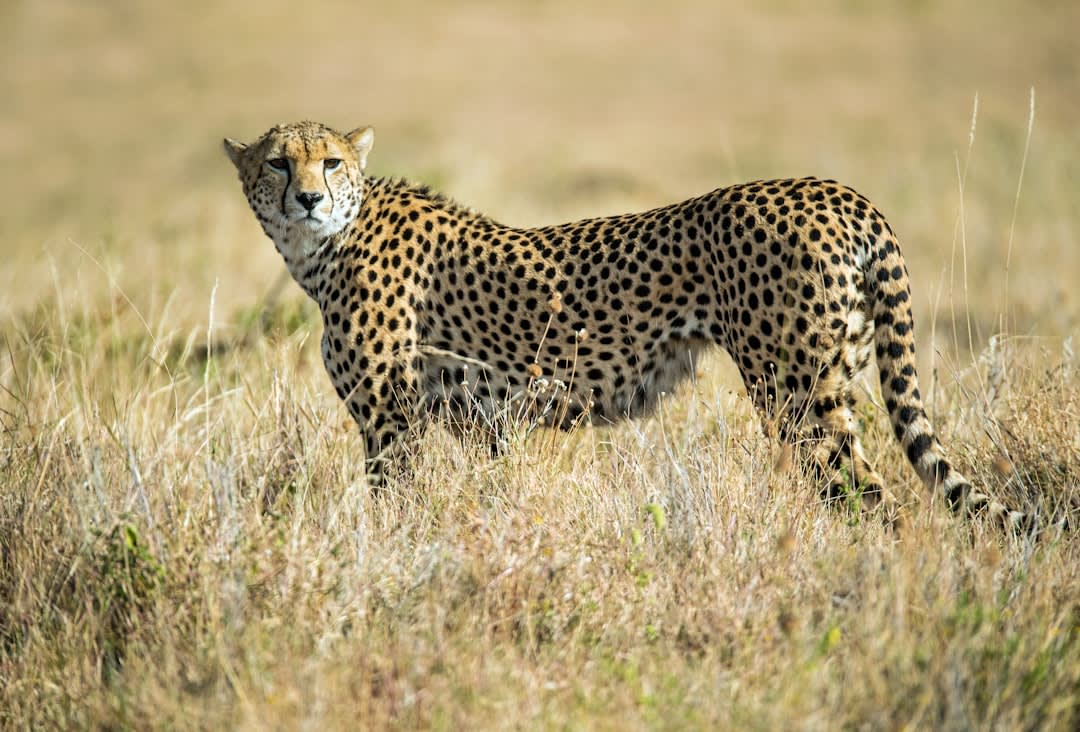
Kenya hosts fewer than 1,400 cheetahs—among the world's last strongholds for the species—facing habitat loss, prey depletion, and human conflict. Leading programmes like Action for Cheetahs in Kenya and the Mara-Meru Cheetah Project combine science, community engagement, and ranger support to secure their survival.
Current Conservation Status: Kenya's Cheetah Population at a Glance
Kenya is home to fewer than 1,400 cheetahs, making it one of the last remaining strongholds for the species globally.[1] The cheetah (Acinonyx jubatus) is listed as Vulnerable on the IUCN Red List, with fewer than 7,500 mature adults surviving in the wild across Africa.[1] Within Kenya, the Tsavo Conservation Area and the Maasai Mara ecosystem hold the largest and most viable cheetah populations—two ecosystems of critical international importance for the species' long-term survival.[2]
In Kenya, cheetahs are listed as an endangered species under the Wildlife and Conservation Management Act, 2013, and are fully protected under CITES Appendix I.[3] However, legal protection alone has not reversed population decline; most of Kenya's cheetah range lies on unprotected land, where 67% of the global cheetah population survives amid acute anthropogenic pressures.[4]
Why Cheetahs Matter in Kenya
Cheetahs are apex predators that regulate prey populations and maintain ecosystem health across Kenya's savannas and semi-arid rangelands. They are also cultural icons: the Maasai and other pastoral communities have coexisted with cheetahs for centuries, and the species draws international ecotourism revenue that supports local livelihoods and conservation funding.
Unlike lions or leopards, cheetahs are non-confrontational hunters specializing in small to medium ungulates. They rarely attack livestock, yet are frequently blamed for predation and killed in retaliation—a tragic case of mistaken identity. Understanding and protecting cheetahs requires addressing not only habitat fragmentation but also community perceptions and economic pressures on pastoral herders.
Primary Threats to Kenya's Cheetahs
Habitat Loss and Fragmentation
Cheetahs are wide-ranging carnivores with documented home ranges exceeding 3,000 km², and densities rarely above 0.02 per km².[4] The transition from large collective ranches to smaller private farms has splintered landscapes into isolated patches too small to support viable populations. Land use change—driven by human settlement, agricultural expansion, and infrastructure development—continues to erode cheetah habitat at an accelerating pace.[5]
In the Tsavo Ecosystem alone, increasing human populations and demand for land and settlement have caused ever-closer interaction between humans and wildlife, leading to conflict and livestock depredation that directly threatens cheetah survival.[2]
Prey Depletion
Cheetahs depend on wild ungulates—gazelles, impalas, and warthogs—for survival. Overhunting and bushmeat harvesting across Kenya have decimated prey populations, forcing cheetahs to take livestock or starve. This prey loss is a direct driver of human-wildlife conflict and is compounded by illegal wildlife trade targeting the same prey species.[3][5]
Human-Wildlife Conflict and Retaliatory Killing
Although cheetahs rarely kill livestock compared to lions or hyenas, herders often blame any predation on visible cheetahs. Retaliatory killing—both deliberate and accidental—remains a leading cause of cheetah mortality outside protected areas.[3][5] Livestock farmers also erect fences and construct predator-proof enclosures that, while protecting livestock, restrict cheetah movement and access to wild prey, further isolating populations.
Illegal Trade and Pet Trafficking
The illegal pet trade is an emerging and escalating threat to cheetahs globally and in East Africa. Cheetah cubs are trafficked for private collections, reducing breeding populations and introducing disease risk.[1] Trade networks exploit weak enforcement in remote areas and capitalize on cheetahs' docile temperament and striking appearance.
Climate Variability and Ecosystem Stress
Prolonged droughts and erratic rainfall patterns—increasingly linked to climate change—reduce vegetation, concentrate prey around remaining water sources, and increase competition between wildlife and pastoral livestock. These stressors amplify human-wildlife conflict and force cheetahs into marginal habitats where survival is precarious.
Conservation Programmes and Organisations Working in Kenya
Action for Cheetahs in Kenya (ACK)
Action for Cheetahs in Kenya is the flagship cheetah conservation organisation in the country, founded in 2009 (originally as CCF Kenya in 2001 by Mary Wykstra and Laurie Marker).[6] ACK's mission is to promote cheetah conservation through research, awareness, and community participation, working closely with the Kenya Wildlife Service (KWS) under permits from the Ministry of Education, Science and Technology.[6]
ACK operates three core conservation projects:
- Cheetah and Habitat Monitoring in Salama: Long-term population surveys and habitat assessment using field scouts recruited from local communities.[6]
- Scat Detection Dogs: Innovative use of trained dogs to locate cheetah droppings, enabling non-invasive population monitoring and genetic sampling.[6]
- COOL Crafts: A community income-generation programme that reduces economic pressure on poaching by offering sustainable livelihoods through craft-making.[6]
ACK's team comprises scientists, field scouts, and administrators drawn from communities sharing space with cheetahs, ensuring local knowledge and cultural relevance in conservation design.[6]
Mara-Meru Cheetah Project (MMCP)
The Mara-Meru Cheetah Project, supported by the Cheetah Conservation Fund (CCF) Canada and partners, operates across the Greater Mara ecosystem with an integrated approach combining science, education, and community empowerment.[7] Between May and September 2025, MMCP deployed advanced field tools—portable X-ray units and mobile ultrasound devices—to assess cheetah health and monitor populations via GPS-collared individuals.[7]
MMCP's education arm reached young learners through school outreach programmes and the Nexus Dicey conservation games, developing locally relevant educational materials on cheetah reporting and identification to inspire the next generation of conservation stewards.[7]
Tsavo Cheetah Project (Felidae Conservation Fund)
Researcher Cherie Schroff and the Felidae Conservation Fund lead the Tsavo Cheetah Project, evaluating population and conservation status of cheetahs across the greater Tsavo ecosystem since 2011 in cooperation with the Kenya Wildlife Service.[2] The project conducts long-term research across the unfenced Tsavo West and Tsavo East National Parks and connecting ranchlands to identify and mitigate threats and secure viable populations.[2] The Tsavo area, covering 16,000 square miles (42,000 km²), holds one of Kenya's most important cheetah populations and offers potential connectivity with Tanzania's cheetah range.[2]
Kenya Wildlife Trust: Mara Predator Conservation Programme
The Mara Predator Conservation Programme (MPCP) was formed in 2018 when Kenya Wildlife Trust merged its Mara Lion and Mara Cheetah projects (both established in 2013).[8] MPCP's dual goals are to determine the current status of lions and cheetahs in the Greater Mara ecosystem and identify and mitigate major threats driving population decline. The programme has conducted intensive monitoring sessions across six conservancies and the national reserve, implementing predator-proof bomas (traditional livestock enclosures reinforced with thorny branches) and testing recycled plastic poles as deterrents.[8]
Community Conservancies and Ranger Networks
Kenya's community conservancy model has emerged as a powerful tool for cheetah conservation outside formal protected areas. By ensuring communities see tangible benefits from conservation—through ecotourism revenue, sustainable livestock grazing, and compensation programmes—conservancies transform former poachers into rangers and herders into stewards of the land.[9]
Community rangers, recruited from pastoral communities, conduct anti-poaching patrols, monitor wildlife movement using modern technology, and mediate human-wildlife conflict. During the COVID-19 pandemic, these rangers faced severe funding challenges; rapid-response grants from conservation initiatives provided crucial financial support to maintain operations and prevent funding collapse.[10]
Technology and Field Methods
Modern cheetah conservation in Kenya increasingly relies on non-invasive monitoring and conflict mitigation tools:
- GPS Collar Tracking: Collared cheetahs provide real-time movement data, revealing habitat use, range size, and conflict hotspots.[7]
- Scat Detection Dogs: Trained canines locate cheetah droppings for non-invasive genetic sampling and population estimation.[6]
- Trail Cameras: Remote cameras capture cheetah presence and behaviour, building evidence for population surveys.[7]
- Veterinary Field Units: Portable X-ray and ultrasound equipment enable health assessments of collared individuals without capture stress.[7]
- Community-Based Monitoring: Mobile technology allows rangers to report wildlife sightings, poaching incidents, and conflict events in real time.[9]
- Predator-Proof Enclosures: Metal fencing, stone walls, and reinforced traditional bomas reduce livestock losses and mitigate retaliatory killing.[9]
Education and Awareness Campaigns
Changing local perceptions of cheetahs is as critical as habitat protection. Recent peer-reviewed research (2026) examined the effectiveness of different presentation methods—video, interactive games, and in-person talks—on cheetah conservation awareness among Kenyan schoolchildren.[11] Findings show that interactive and multi-sensory approaches significantly improve knowledge retention and conservation intention, particularly among students from pastoral communities with direct experience of wildlife.
Programmes like MMCP's Nexus Dicey games and ACK's community engagement initiatives leverage storytelling, local language, and cultural relevance to shift attitudes toward coexistence. Educational materials now explicitly address myths about cheetah behaviour (e.g., that cheetahs routinely kill livestock) and emphasize the species' ecological role and vulnerability.[7]
A question about Kenya? Ask Tembo
Role of Safari Tourism and Responsible Travel
International ecotourism is a critical revenue stream for cheetah conservation in Kenya. Visitors to the Maasai Mara, Tsavo, and other cheetah strongholds generate income that funds ranger salaries, research, and community conservation initiatives. When booking a safari, travellers can directly support cheetah protection by choosing operators and lodges committed to conservation partnerships.
On SafariFind, you can browse and book safaris with operators actively supporting cheetah research and community conservancies, ensuring your visit directly funds protection efforts. Responsible safari practices—maintaining wildlife distance, following park regulations, and respecting ranger guidance—also minimize disturbance to cheetahs and their prey.
The broader predator conservation landscape in Kenya includes lions, leopards, and African wild dogs; supporting integrated carnivore conservation benefits all large cats and canids sharing Kenya's rangelands.
Results, Progress, and Remaining Challenges
Documented Successes
- Population Monitoring: ACK and Tsavo Cheetah Project surveys have established baseline population estimates and identified key conservation areas, enabling targeted interventions.[2][6]
- Community Engagement: Across six conservancies in the Greater Mara, MPCP and partner organisations have trained and equipped community rangers, built predator-proof enclosures, and conducted over 2 predator-proof bomas construction projects.[8]
- Education Reach: MMCP's school programmes reached hundreds of young learners with cheetah conservation content, demonstrating measurable shifts in knowledge and attitude.[7]
- Ranger Support: Emergency conservation funding during COVID-19 enabled 105 conservancy rangers across seven conservancies to maintain anti-poaching patrols and conflict mitigation work over 14 months.[10]
- Genetic Research: Scat detection dogs and non-invasive sampling have enabled genetic studies revealing population structure, kinship, and disease status without capture stress.[6]
Ongoing Challenges
- Funding Instability: Community conservancies and ranger networks remain heavily dependent on grants and tourism revenue. Economic shocks (e.g., pandemic-related tourism collapse) directly threaten ranger livelihoods and anti-poaching capacity.[10]
- Habitat Fragmentation: Land subdivision and agricultural expansion continue to outpace conservation efforts. Even where cheetahs are legally protected, unprotected corridors are increasingly isolated.[4]
- Prey Depletion: Wild ungulate populations remain under pressure from bushmeat hunting and livestock competition. Without addressing prey base recovery, cheetah populations cannot stabilize.[3][5]
- Emerging Illegal Trade Threat: Cheetah trafficking for the pet trade is rising, and enforcement capacity to intercept trade networks remains limited.[1]
- Climate Stress: Prolonged droughts intensify human-wildlife conflict and ecosystem stress; climate adaptation strategies for cheetah conservation are still in early stages.[5]
- Data Gaps: Most cheetah monitoring occurs within protected areas; populations on unprotected rangelands—where 67% of cheetahs live—remain poorly understood, limiting evidence-based policy.[4]
National Policy and Legal Framework
Kenya's legal framework for cheetah protection is comprehensive but unevenly enforced:
- Wildlife and Conservation Management Act, 2013: Lists cheetahs as an endangered species with full protection; hunting is prohibited.[3]
- CITES Appendix I: Cheetahs are listed on the Convention on International Trade in Endangered Species, restricting international commerce.[3]
- Convention on Migratory Species (CMS): Cheetahs are included in CMS Appendix I, recognizing their transboundary conservation needs, particularly with Tanzania.[3]
- National Action Plan: Kenya has an active Cheetah National Action Plan (updated as part of broader large carnivore strategies) addressing habitat loss, human-wildlife conflict, and capacity building.[3]
Implementation remains a bottleneck: remote rangelands where most cheetahs live have limited ranger presence and enforcement capacity, and community participation in policy design is still developing.
Cross-Border Conservation and Regional Cooperation
Cheetahs in the Tsavo area show strong potential for connectivity with Tanzania's populations, and the Greater Mara ecosystem straddles the Kenya-Tanzania border.[2] Regional conservation strategies coordinated through the IUCN Species Survival Commission Cat Specialist Group emphasize transboundary movement corridors and harmonized protection standards. However, political and operational coordination between Kenya and Tanzania remains a work in progress, and some critical wildlife corridors remain unprotected.[3]
How You Can Help Protect Kenya's Cheetahs
Before Your Safari
- Choose conservation-committed operators: Book with safari companies and lodges that partner with ACK, MMCP, Tsavo Cheetah Project, or community conservancies. Ask operators directly about their conservation contributions.
- Learn cheetah ecology: Understanding cheetah behaviour, threats, and conservation needs enriches your safari experience and helps you contribute meaningfully to discussions with guides.
- Support ethical operators: Prioritize companies with strong safety standards, fair ranger wages, and transparent community benefit-sharing models.
During Your Safari
- Respect wildlife distance: Maintain recommended viewing distances to avoid stressing cheetahs and disrupting hunts or resting behaviour.
- Follow ranger guidance: Guides and rangers possess deep knowledge of local cheetah movements and behaviour; their instructions prioritize both your safety and wildlife welfare.
- Report sightings responsibly: Share cheetah observations with guides and park staff; your data contributes to ongoing monitoring efforts.
- Photograph ethically: Avoid using flash, making excessive noise, or approaching nests or young cheetahs.
After Your Safari
- Donate to cheetah programmes: Direct contributions to Action for Cheetahs in Kenya, Cheetah Conservation Fund, or Felidae Conservation Fund fund research, ranger salaries, and community initiatives.
- Advocate for habitat protection: Support policy campaigns for land-use planning that protects cheetah corridors and wildlife-friendly ranching practices.
- Share your story: Social media and word-of-mouth are powerful tools for raising awareness about cheetah conservation and inspiring others to visit Kenya responsibly.
- Report illegal trade: If you encounter cheetahs for sale or trafficking, report it to CITES authorities or the Kenya Wildlife Service.
Last Reviewed July 2026
Conservation data changes rapidly. For the latest cheetah population estimates, threat assessments, and programme updates, consult the Kenya Wildlife Service, Action for Cheetahs in Kenya, and the IUCN Cat Specialist Group (see citations below).
Frequently Asked Questions
How many cheetahs are left in Kenya?
Kenya is home to fewer than 1,400 cheetahs, according to Action for Cheetahs in Kenya. This represents one of the last viable strongholds for the species, which has fewer than 7,500 mature adults remaining in the wild across all of Africa. The Maasai Mara ecosystem and Tsavo Conservation Area support the largest populations.
Are cheetahs endangered in Kenya?
Yes. Cheetahs are listed as an endangered species under Kenya's Wildlife and Conservation Management Act, 2013, and as 'Vulnerable' on the IUCN Red List with a high risk of qualifying as 'Endangered' in the near future. They are also protected under CITES Appendix I, prohibiting international trade.
What are the main threats to cheetahs in Kenya?
The primary threats are habitat loss and fragmentation (due to land subdivision and agricultural expansion), prey depletion from overhunting and bushmeat harvesting, human-wildlife conflict and retaliatory killing, illegal pet trade, and climate-driven droughts that intensify competition between wildlife and livestock. Approximately 77% of cheetah range is on unprotected land, where threats are highest.
What organisations are leading cheetah conservation in Kenya?
Action for Cheetahs in Kenya (ACK), founded in 2009, is the flagship cheetah conservation organisation. Other key players include the Mara-Meru Cheetah Project (supported by Cheetah Conservation Fund Canada), the Tsavo Cheetah Project (Felidae Conservation Fund), and Kenya Wildlife Trust's Mara Predator Conservation Programme. All work with the Kenya Wildlife Service and local community conservancies.
Can kids go on a safari in Kenya to see cheetahs?
Yes. Many safari operators in Kenya welcome families with children to view cheetahs in the Maasai Mara, Tsavo, and other parks. School groups also participate in education programmes run by conservation organisations like the Mara-Meru Cheetah Project. Always check age, health, and safety requirements with your operator and ensure travel vaccinations are current.
How can I support cheetah conservation when booking a safari in Kenya?
Choose safari operators and lodges that partner with cheetah conservation programmes such as Action for Cheetahs in Kenya or the Mara-Meru Cheetah Project. Tourism revenue directly funds ranger salaries, research, and community initiatives. On SafariFind, you can browse operators committed to conservation partnerships. You can also donate directly to cheetah programmes and advocate for wildlife-friendly land-use policies.
What is the difference between cheetahs and other large carnivores in Kenya?
Cheetahs are non-confrontational hunters specializing in small to medium ungulates (gazelles, impalas). Unlike lions or leopards, they rarely attack livestock, yet are frequently blamed for predation and killed in retaliation. They also have much lower genetic diversity and are more vulnerable to habitat fragmentation due to their wide-ranging behaviour and low population densities (rarely above 0.02 per km²).
Is cheetah hunting legal in Kenya?
No. Hunting cheetahs is prohibited in Kenya under the Wildlife and Conservation Management Act, 2013. Cheetahs are fully protected, and Kenya is listed among countries with a hunting ban. Illegal killing—both deliberate and accidental—remains a significant threat outside protected areas.
What technology is used to monitor cheetahs in Kenya?
Conservation programmes use GPS collar tracking to monitor movement and habitat use, scat detection dogs for non-invasive genetic sampling, trail cameras for population surveys, and portable veterinary equipment (X-ray and ultrasound) to assess health. Community rangers also use mobile technology to report sightings and conflict incidents in real time.
How does climate change affect cheetahs in Kenya?
Prolonged droughts and erratic rainfall reduce vegetation, concentrate prey around remaining water sources, and increase competition between wildlife and pastoral livestock. These stressors amplify human-wildlife conflict and force cheetahs into marginal habitats. Climate adaptation strategies for cheetah conservation are still in early stages but are increasingly integrated into long-term conservation plans.
Are cheetahs in Kenya connected to populations in other countries?
Yes. Cheetahs in the Tsavo area show strong potential for connectivity with Tanzania's populations, and the Greater Mara ecosystem straddles the Kenya-Tanzania border. Regional conservation strategies emphasize transboundary movement corridors. Kenya's Cheetah National Action Plan aligns with IUCN Cat Specialist Group guidelines for regional cooperation, though cross-border coordination remains a work in progress.
What is the illegal pet trade threat to Kenya's cheetahs?
The illegal pet trade is an emerging and escalating threat to cheetahs globally and in East Africa. Cheetah cubs are trafficked for private collections, reducing breeding populations and introducing disease risk. Cheetahs' docile temperament and striking appearance make them targets for trafficking networks. Enforcement capacity to intercept trade remains limited, but the issue is increasingly recognized as a conservation priority.
Trips that match this guide
ACATREE TOURS AND SAFARIS · ★ 5.0
From £3,229 pp