Cheetah Conservation in Eswatini: Status and Action in 2026
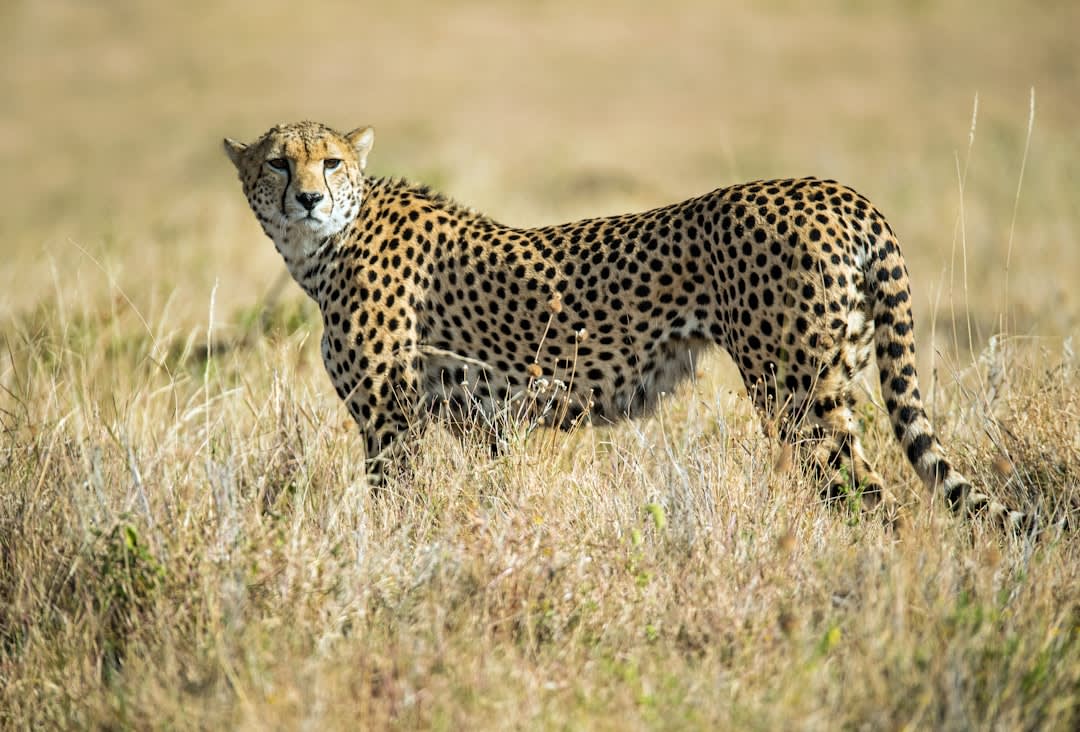
Cheetahs were locally extinct in Eswatini before their reintroduction, including a documented return to Hlane Royal National Park. In 2026, their future depends on secure habitat, careful population management and cooperation across southern Africa.[1][2]
Last reviewed August 2026. Conservation data changes — see the cited sources for the latest figures.
Quick answer: Cheetahs are listed globally as Vulnerable on the IUCN Red List, while Eswatini represents a reintroduction story rather than a stronghold with a published national population estimate.[1] The species was locally extinct in Eswatini before conservationists returned cheetahs to the country; three animals were reported as reintroduced to Hlane Royal National Park in 1997.[2] Current conservation priorities are maintaining viable genetics, protecting prey and habitat, reducing conflict and ensuring that reintroduced animals are monitored over the long term.
That distinction matters. A cheetah sighting in a protected area can demonstrate that restoration is possible, but it does not by itself prove that a self-sustaining national population has been established. The research available for this 2026 guide does not provide a verified current count of wild cheetahs in Eswatini, nor does it document a new national recovery total. The responsible conclusion is therefore cautious: Eswatini has restored cheetahs to at least part of their former range, but the scale and trajectory of the population should be confirmed through park-level monitoring.
Why cheetah conservation matters in Eswatini
The cheetah, Acinonyx jubatus, is a specialised African predator adapted to open landscapes where it can detect and pursue prey. The IUCN Cat Specialist Group identifies habitat loss and fragmentation, land-use change, retaliatory killing, illegal trade and declining prey as the species’ principal threats.[1] These pressures are relevant to Eswatini because conservation does not end at a reserve boundary: agricultural expansion, settlement growth, wildfire, invasive plants and unsustainable resource use all affect the wider ecological setting.[3]
Eswatini is a small, intensively used country with a network of protected and conserved areas. The country’s environmental pressures include habitat loss and alteration associated with agriculture, urbanisation and settlement development; wildfires and invasive species are also identified as major pressures on biodiversity.[3] The IUCN’s protected-area assessment reports that at least one invasive plant species affects 80% of Eswatini, illustrating the scale of habitat-management work required across the country.[3]
Cheetah restoration also has a historical dimension. The species’ indigenous population in Eswatini was described as extinct before the 1997 reintroduction of three cheetahs into Hlane.[2] Another conservation account describes the first successful reintroduction into the Kingdom of Eswatini after the species had been locally extinct for more than 40 years.[4] The two accounts differ in emphasis rather than in the central message: cheetah conservation in Eswatini is a restoration programme built around returning a lost predator, not simply protecting an abundant resident population.
Hlane is especially important in this story because it is a recognised site for the reintroduction. Its future should be considered alongside national protected-area planning, neighbouring reserves and cross-border conservation. Eswatini’s conservation institutions already work regionally: the Eswatini National Trust Commission collaborates with governments and conservation organisations in Mozambique and South Africa, while the country has also established the Eswatini Environmental Fund to aggregate government, fine-revenue and development-partner finance for environmental sustainability.[3]
The main threats to cheetahs in Eswatini
Habitat loss and fragmentation
Habitat loss is a primary threat to cheetahs globally, and Eswatini’s protected areas face wider pressures from agriculture, urbanisation and settlement development.[1][3] Fragmentation can reduce the amount of usable space available to a wide-ranging predator and make movement between suitable areas more difficult. It can also isolate small populations, increasing the importance of coordinated management between reserves.
The available research does not provide a cheetah-specific map of habitat loss in Eswatini or a measured percentage change in the species’ range inside the country. It would therefore be misleading to attach a national figure to this threat. The evidence supports a more precise statement: the landscape pressures documented for Eswatini make habitat security an essential condition for cheetah recovery.[3]
Prey depletion and human-wildlife conflict
Cheetahs depend on sufficient natural prey. The IUCN Cat Specialist Group links prey depletion with overhunting, bushmeat harvesting and illegal trade; where prey declines, cheetahs may be more likely to take livestock, increasing conflict with people.[1] This is a connected problem rather than a single act of poaching: habitat change, unsustainable harvesting and weak protection can reduce prey and raise the chance of retaliatory killing.
No source in the supplied research provides a cheetah-specific number of livestock attacks, retaliatory killings or poaching incidents in Eswatini. The absence of a published figure should not be read as proof that the threats are absent. It means that visitors, donors and writers should avoid presenting unsupported national statistics as fact.
Illegal wildlife and pet trade
Illegal trade is listed among the major threats to cheetahs by the IUCN Cat Specialist Group, and recent conservation reporting also identifies the illegal pet trade as an increasing concern for the species globally.[1][5] Cheetahs are included in Appendix I of CITES and Appendix I of the Convention on Migratory Species, reflecting the need for strict international protection and cooperation.[1]
These global trade pressures are relevant to a reintroduced population even when no Eswatini-specific seizure total is available. Enforcement agencies need intelligence, trained personnel and cross-border collaboration. A 2025 evaluation of a cross-regional wildlife-conservation programme reported that partnerships supported information sharing, cross-border enforcement activities and forensic standard operating procedures, while also noting risks created by external-funding dependence, staff turnover and the reassignment of trained rangers.[6] Those lessons apply broadly to conservation systems in southern and eastern Africa, although the research does not identify that programme as an Eswatini cheetah project.
Climate, fire and invasive species
Climate change is identified as an emerging concern for Eswatini’s natural ecosystems.[3] The country also faces pressure from wildfires and invasive plants, and unsustainable harvesting of trees for charcoal has contributed to habitat degradation affecting mammals and other wildlife.[3] The supplied sources do not quantify how climate change has altered cheetah survival, reproduction or prey availability in Eswatini. A sound conservation plan should nevertheless treat climate resilience, fire management, water security and invasive-species control as ecosystem priorities rather than as separate cheetah issues.
What is being done for cheetahs
Reintroduction and metapopulation management
The defining intervention in Eswatini has been reintroduction. Three cheetahs were reportedly returned to Hlane Royal National Park in 1997 after the country’s indigenous population had become extinct.[2] The Origins Foundation describes its wider cheetah programme as involving wildlife translocations, range expansion, metapopulation management, veterinary and field operations, and collaboration among governments, reserve managers, veterinarians, landowners and conservation organisations.[4]
Metapopulation management is important for small, separated populations. In practical terms, it can involve monitoring individuals, assessing breeding success, managing demographic risks and considering carefully planned transfers when genetics or population structure require intervention. The research describes this approach in southern African conservation programmes, but it does not publish a current Eswatini-specific breeding or genetic-management result. Any claim that the Hlane population is genetically secure or self-sustaining would therefore go beyond the available evidence.
Monitoring, veterinary work and enforcement
Effective reintroduction requires more than releasing animals. Field teams need to know where cheetahs move, whether they survive, what prey they use and how they interact with neighbouring land uses. Veterinary operations can support safe translocations and animal-health decisions, while ranger teams and law-enforcement partners protect the wider reserve system.
Examples elsewhere in Africa show the value of combining field science with community work. The Mara-Meru Cheetah Project in Kenya reported an integrated approach involving science, education and community empowerment, including school outreach and conservation materials.[5] In Namibia, the Cheetah Conservation Fund launched a community-based Cheetah Ranger programme modelled on a Lion Ranger initiative; its rangers were trained to patrol, track cheetahs and work with communities to prevent conflict.[7] These are not Eswatini projects, and their results should not be attributed to Hlane. They are useful regional examples of the tools that can complement protected-area reintroduction.
Protected-area finance and partnerships
Eswatini’s conservation finance framework includes the Eswatini Environmental Fund, operated by the Ministry of Tourism and Environmental Affairs. The fund is capitalised through government concessions, environmental fines and grants from development partners.[3] The Eswatini National Trust Commission also works with governments and conservation organisations in Mozambique and South Africa, providing a basis for regional cooperation.[3]
These mechanisms do not automatically guarantee cheetah funding. Their value is that they can help support the broader protected-area system on which cheetahs depend: habitat management, law enforcement, ecological monitoring and community-based conservation. Long-term conservation finance is particularly important because reintroduced predators need management after the initial release, not only during it.
Community and tourism’s role
Cheetah conservation succeeds when local people benefit from living alongside protected wildlife and have credible ways to report problems. The IUCN identifies livestock conflict as a consequence that can follow prey depletion, making coexistence measures central to cheetah protection.[1] In Eswatini, community conservation should therefore connect land-use planning, livestock management, environmental education, employment and fair participation in tourism revenue.
Tourism can contribute by generating income for protected areas, creating conservation-related jobs and making wildlife protection economically meaningful. However, the supplied research does not provide a cheetah-specific tourism revenue figure for Eswatini, so the benefits should not be exaggerated. Visitors should ask operators how park fees, conservation levies or community payments are handled, and whether the operator can explain its wildlife-welfare and conservation policies.
A responsible approach to protecting Eswatini’s national parks and reserves recognises that cheetahs share landscapes with other threatened species and with people. Predator conservation should be integrated with wider protected-area planning, rather than treated as a stand-alone attraction.
Travellers can book conservation-supporting safaris on SafariFind, but a booking should be viewed as one contribution to a larger system. The strongest operators are transparent about permits, park fees, conservation partners, guide training and the limits of what a visitor experience can demonstrate.
Results and setbacks: what 2026 shows
| Conservation question | What the research supports | What remains uncertain |
|---|---|---|
| Has Eswatini restored cheetahs? | Yes. Cheetahs were reintroduced after local extinction, including a reported release of three animals into Hlane in 1997.[2][4] | The supplied research does not provide a verified 2026 national population estimate. |
| Is the species globally secure? | No. The cheetah remains Vulnerable on the IUCN Red List.[1] | Global estimates vary by source and the research does not provide a current Eswatini trend. |
| Are the threats resolved? | No. Habitat loss, fragmentation, conflict, illegal trade and prey depletion remain recognised threats.[1][3] | Eswatini-specific rates for killings, trade, conflict and habitat change are not supplied. |
| Is conservation collaborative? | Regional partnerships and national environmental-finance mechanisms are documented.[3][4] | The research does not identify a single current cheetah partnership responsible for all work in Eswatini. |
The clearest success is restoration: a species absent from Eswatini was returned through conservation intervention.[2][4] That achievement demonstrates the value of protected areas, specialist expertise, veterinary planning and long-term commitment. It should not be confused with completed recovery. A reintroduced population can remain vulnerable to small numbers, limited genetic diversity, prey changes, disease, conflict and funding interruptions.
Regional evidence also shows why institutional continuity matters. The UNODC-led evaluation found that trained staff can be reassigned, staff turnover can weaken local capacity and programmes can remain dependent on external funding.[6] These are not documented cheetah-specific setbacks in Eswatini, but they are credible conservation-management risks that reinforce the need for locally embedded skills and durable finance.
How travellers can help responsibly
- Choose legitimate protected-area tourism. Use established parks, reserves and licensed operators, and ask how visitor payments support conservation and communities.
- Do not request close-contact cheetah experiences. Avoid activities that encourage handling, inappropriate feeding or unsafe proximity. The research identifies illegal trade and the pet trade as serious threats, so wildlife should be observed as wildlife, not marketed as a possession.[1][5]
- Respect sightings. Follow guide instructions, remain quiet, keep the required distance and never pressure a guide to leave a road or approach an animal for a photograph.
- Support habitat, not only individual animals. Donations or bookings that help ranger teams, ecological monitoring, community coexistence and protected-area operations can address the conditions cheetahs need to survive.
- Ask for evidence. Responsible organisations should be able to name their partners, explain their monitoring and distinguish confirmed results from future goals.
- Share accurate information. Do not repeat an unverified national cheetah count. For the latest population and reintroduction information, consult the IUCN Cat Specialist Group, park authorities and the organisations cited in this article.
Eswatini’s cheetah story is one of cautious hope. Reintroduction restored the species to a country where it had been locally extinct, but lasting recovery will depend on habitat protection, prey availability, conflict prevention, enforcement, sound genetics and reliable conservation finance.[1][2][3][4] In 2026, the most credible way to support that future is to value verified monitoring and community-centred conservation as much as the excitement of seeing a cheetah on safari.
Frequently Asked Questions
Are cheetahs found in Eswatini in 2026?
Yes. Cheetahs were reintroduced to Eswatini after local extinction, including a reported reintroduction of three animals into Hlane Royal National Park in 1997.[1][2] The supplied research does not provide a verified 2026 national population count.
When were cheetahs reintroduced to Eswatini?
Three cheetahs were reported as reintroduced to Hlane Royal National Park in 1997.[2] Another conservation account describes the return as the first successful reintroduction after more than 40 years of local extinction.[3]
What is the cheetah’s conservation status?
The cheetah is globally listed as Vulnerable on the IUCN Red List.[1]
Which park is associated with cheetah reintroduction in Eswatini?
Hlane Royal National Park is the park identified in the supplied research as the site where three cheetahs were reintroduced in 1997.[2]
What are the main threats to cheetahs in Eswatini?
The main relevant threats are habitat loss and fragmentation, prey depletion, retaliatory killing linked to livestock conflict, illegal wildlife trade and broader ecosystem pressures such as wildfire and invasive species.[1][4]
How does habitat loss affect cheetahs?
Habitat loss and fragmentation reduce usable space and can isolate populations. Eswatini’s documented pressures include agricultural expansion, urbanisation, settlement development, wildfires and invasive plants.[1][4]
Does Eswatini have a confirmed national cheetah population estimate?
The research supplied for this article does not provide a verified current national estimate. Claims about the 2026 population should therefore be checked against current park monitoring and official conservation sources.
Can a wildlife safari support cheetah conservation in Eswatini?
Yes, responsibly managed tourism can help fund protected areas, conservation jobs and community benefits, although the supplied research does not provide a cheetah-specific tourism revenue figure for Eswatini. Travellers should ask operators how fees and conservation contributions are used.
How can tourists help cheetahs in Eswatini?
Choose legitimate operators, follow wildlife-viewing rules, avoid close-contact experiences, support protected-area and community conservation, and ask organisations to distinguish verified results from future plans.
Why is regional cooperation important for cheetahs?
Cheetah conservation involves translocations, genetics, enforcement and landscapes that may extend beyond one reserve or country. Eswatini’s conservation institutions collaborate regionally with partners in Mozambique and South Africa.[4]